How to Connect Airpods to Non Apple Device
Knowing how to connect AirPods to your devices is easier than you might think. Apple’s AirPods have always been the exponent of proper wireless connectivity, pairing and working seamlessly with just about any device that carries the name Apple. While AirPods also utilize Bluetooth in their connectivity, you can trace their efficiency with Apple devices to the H1 chip embedded inside.
Interestingly, you can also connect AirPods to non-Apple devices, whether a Windows PC or an Android smartphone. AirPods connect to non-Apple devices over standard Bluetooth, but Apple-only features depend on Apple’s software ecosystem and vary by model — not simply the chip inside. It is also worth noting that newer models such as AirPods Pro 2 use the H2 chip, so the limitation is not an H1-only story.
But, hey, who says the stellar audio output from AirPods can’t make up for their shortcomings on non-Apple devices? Keep reading to discover how to connect AirPods to both Apple and non-Apple devices.
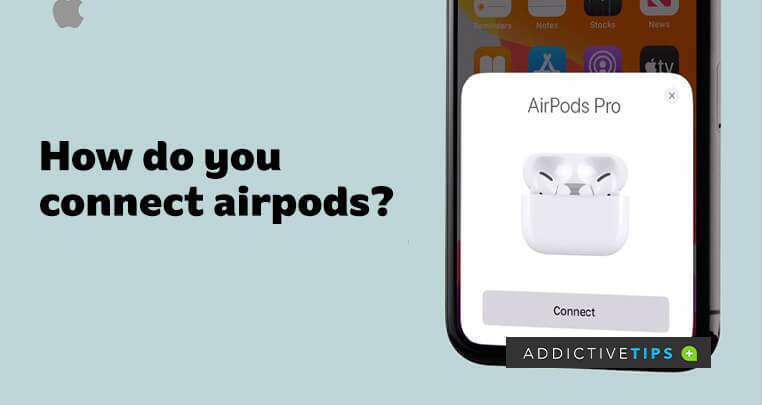
How to Connect AirPods to iPhone, iPad, and Mac
Connecting AirPods to Apple devices is the easiest as no unique input is required to establish connectivity. Interestingly, you enjoy a seamless connection if all your Apple devices are synced to the same Apple ID. Your devices automatically establish a connection with your AirPods without any input command from you, thanks to the H1 chip.
To connect your AirPods to your iPhone and iPad,
- Enable Bluetooth on your iPhone and go to the home screen
- Hold the charging case next to your iPhone with the lid open and the AirPods inside
- A window will automatically pop up on your iPhone, prompting you to connect. Tap the Connect button to pair
- Another prompt on using the Hey Siri feature may also pop up, depending on your iPhone model and iOS version.
- Either way, repeat all the steps above to connect your AirPods to an iPad.
Things are a little bit different when it comes to a MacBook, but you should be up and running with the steps below:
- If your AirPods don’t connect automatically with your MacBook, go to System preference on your MacBook and enable Bluetooth
- Place the AirPods in their case with the lid open
- Press and hold the button at the charging case’s back till it flashes a white light
- Check the Devices list on your Mac and select AirPods to connect
You may need to set your AirPods as the output device in the Volume Control menu to hear any sound.
How to Connect Apple AirPods to Non-Apple Devices
You can connect AirPods to any non-Apple device over standard Bluetooth, but it is worth knowing upfront which features will and will not follow you to Android or Windows before you start the pairing process.
What still works on non-Apple devices:
- Audio playback (music, podcasts, video)
- Microphone use for calls and voice recordings
- Phone and video calls
What usually does not work or is limited on non-Apple devices:
- Siri voice control
- Automatic device switching between your Apple devices
- Audio sharing with a second pair of AirPods
- Personalized spatial audio and some advanced hearing-health features, which require an Apple device and supporting software
To put AirPods into Bluetooth pairing mode, the method depends on which model you own. Apple’s official AirPods support page provides a full breakdown of model-specific controls if you are unsure which generation you have:
- AirPods 1st, 2nd, 3rd generation and AirPods Pro 1st generation: Place the AirPods in the case and open the lid. Press and hold the setup button on the back of the case until the status light flashes white.
- AirPods Pro 2nd generation: Place the AirPods in the case and open the lid. Press and hold the setup button on the back of the case until the status light flashes white.
- AirPods 4th generation and AirPods Pro 3rd generation: These models use a front control on the case. With the AirPods inside and the lid open, press and hold the front control (or double-tap, depending on the specific model) until the status light flashes white. The back-button method does not apply to these models.
- AirPods Max: Press and hold the noise control button (or Digital Crown on newer versions) until the status light flashes white.
Once your AirPods are in pairing mode, follow these steps on Android to complete the connection:
- Launch the Settings app on your device and go to Connections > Bluetooth
- With Bluetooth toggled on, place the AirPods in their case with the lid open
- Put your AirPods into pairing mode using the model-specific method described above
- Select AirPods from the list of available devices under the Bluetooth screen
How to Connect AirPods to Windows 10 and Windows 11
Pairing AirPods with a Windows PC is straightforward once you know the steps. Here is how to connect AirPods on both Windows 10 and Windows 11:
- Open Settings on your PC. On Windows 11, go to Bluetooth & devices. On Windows 10, go to Devices.
- Make sure the Bluetooth toggle is switched on.
- Click Add device (Windows 11) or Add Bluetooth or other device (Windows 10), then select Bluetooth from the options.
- Place your AirPods in their case with the lid open and put them into pairing mode using the model-specific method from the section above.
- Your AirPods will appear in the discovered devices list. Click on them to pair and finish setup.
One common issue after pairing on Windows: your AirPods connect successfully but audio still plays through your laptop speakers. If this happens, right-click the volume icon in the system tray, select Sound settings (or Open Sound settings), and under Output, choose your AirPods from the dropdown menu. This manually sets them as your active audio output device.
Final Notes
There you have it — now you know how to connect AirPods to a wide range of devices. If your AirPods won’t connect to the recipient device, do not jump straight to a factory reset — most connection failures have a simpler fix. Work through these steps first:
- Check battery: Make sure both the AirPods and the charging case have enough charge. Low battery is a common cause of pairing failures.
- Confirm Bluetooth is on: It sounds obvious, but verify that Bluetooth is enabled on the device you are trying to pair with.
- Keep the AirPods in the case with the lid open during the pairing process, and keep them close to the device — ideally within a foot or two.
- Disconnect from another device: If your AirPods are already paired to a nearby phone or tablet, they may auto-reconnect to that device instead. Disconnect them from the other device first, or move that device out of range.
- Forget and re-pair: On the device you are trying to connect to, find the AirPods in the Bluetooth list, remove or forget them, and then start the pairing process fresh.
- Refresh the Bluetooth device list: On Android or Windows, toggle Bluetooth off and back on, or simply wait a moment and let the device scan for available devices again.
- Paired but no sound: If the AirPods connect but you hear nothing, manually set them as the audio output device in your sound settings. This is a common extra step on both Android and Windows.
If none of the above resolves the issue, then a factory reset is your last resort. Place the AirPods inside their case, close the lid, wait 30 seconds, then open the lid. Press and hold the setup button on the back of the case (or the appropriate button for your model). The LED light will first flash amber, indicating the reset is in progress — this is normal.
Continue holding until the light flashes white, which confirms the reset is complete. You can then connect AirPods again as a new device. If you notice an AirPods orange light during the reset process, this is normal and indicates the reset is in progress.