Need Netflix Unblocked at School? Try These Easy Steps
Students searching for Netflix unblocked at school run into the same problem: Netflix is blocked on the majority of US school networks and managed devices by default, typically through DNS filtering, IP blacklisting, or deep packet inspection to keep streaming sites off their Wi-Fi. Those restrictions apply whether you’re on a school computer, a Chromebook, or your own laptop connected to school Wi-Fi. That said, students still have three realistic options to watch Netflix at school: a paid VPN on a personal device, a VPN browser extension where installations are permitted, or a mobile hotspot that bypasses school Wi-Fi entirely. For a broader look at VPN options, see our best VPN for streaming guide.
The method that works for you depends entirely on your device and what your school’s IT controls allow. VPN app installations and browser extensions are often blocked on school-issued hardware with administrator locks — those situations are covered in the dedicated sections below.
Editor's Pick September 2026

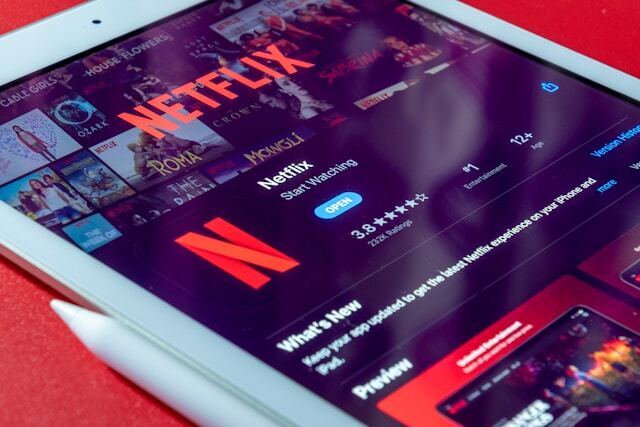
Netflix Unblocked at School: Quickest Ways to Watch
Best Method by Situation
- Personal laptop on school Wi-Fi — Install a paid VPN app (NordVPN, Surfshark, or ExpressVPN) and connect before opening Netflix. This is the most reliable option.
- School Chromebook — If the device isn’t MDM-enrolled, add a VPN extension from the Chrome Web Store. If it is managed, switch to a mobile hotspot instead.
- School-managed computer — App installs are usually blocked. Try a VPN browser extension if extensions are still permitted, or use a mobile hotspot on a personal device.
- No VPN available — Use your phone’s mobile hotspot. It moves your connection off school Wi-Fi completely, so the network filters no longer apply.
Important: If your device is school-issued and enrolled in mobile device management (MDM), most VPN methods will not work. Jump to the school computer or Chromebook sections below for options that account for administrator restrictions.
Why Schools Block Netflix and Whether VPNs Are Allowed
Schools don’t block Netflix arbitrarily — there are specific technical systems doing the work, and understanding them tells you which workaround will actually help when you’re trying to get Netflix unblocked at school.
- DNS filtering — The school’s DNS server redirects Netflix domains to a block page before your request ever leaves the building. A VPN or manual DNS change bypasses this entirely.
- URL and IP blocking — The firewall maintains a blacklist of Netflix IP ranges. A VPN routes your traffic through a different IP, making this filter irrelevant.
- Bandwidth management — Some schools throttle or block streaming traffic to preserve network capacity, not for content reasons. A VPN can help here too, though a mobile hotspot sidesteps the issue completely.
- Deep packet inspection (DPI) — Stricter networks inspect traffic patterns to identify VPN or streaming protocols. Standard VPNs may fail here; you’ll need one with obfuscation support.
Which workaround actually works depends on the specific filtering system your school has deployed. A basic VPN handles DNS and IP blocks with no trouble. DPI requires obfuscation. A managed Chromebook may block VPN apps altogether — in which case the network doesn’t matter at all.
What the Rules Actually Say
Most schools include a clause in their Acceptable Use Policy (AUP) that prohibits bypassing network restrictions. In most K–12 school settings, consequences are disciplinary rather than criminal — a warning, a conversation with IT, or a temporary device restriction. However, policies vary significantly — particularly at colleges and universities — and some institutions may involve law enforcement for repeated or egregious violations. Always review your institution’s specific AUP.
The lowest-risk option is a mobile hotspot. Connecting through your phone’s cellular data means you never touch the school’s network, so no AUP applies. Tor and generic web proxies aren’t worth considering for Netflix — Tor is far too slow for video, and most proxy services are already blacklisted by Netflix’s detection systems.
The sections below break down exactly what to do depending on your device — school computer, Chromebook, or personal laptop on school Wi-Fi.
How to Watch Netflix on a School Computer
The steps you need depend on one thing: whether the computer belongs to you or to the school. A personal laptop connected to school Wi-Fi is a very different situation from a school-issued PC locked down by an IT administrator. Start by identifying which one you have, then follow the path below.
Personal Laptop on School Wi-Fi
If the laptop is yours but Netflix is blocked because of the school’s network filters, a VPN is the most reliable fix for getting Netflix unblocked at school. Here’s how to get it working:
- Download a VPN app. Install NordVPN, Surfshark, or ExpressVPN directly from the provider’s website or your device’s app store. All three offer 30-day money-back guarantees.
- Connect to a nearby server. Choose a server in your country or a neighboring one. Closer servers give you better speeds — important for streaming without buffering.
- Open Netflix in a browser. If the Netflix desktop app is blocked on the network, go to netflix.com in Chrome or Firefox instead. Browser access works just as well for watching and is harder for school filters to target specifically.
- If the VPN itself is blocked, enable your VPN’s obfuscation feature (called “Obfuscated Servers” in NordVPN or “Camouflage Mode” in Surfshark). This disguises VPN traffic so it looks like regular HTTPS traffic.
School-Managed Computer with Admin Restrictions
School-issued Windows and Mac computers are typically managed through IT policy, which means you cannot install new software. Your options narrow significantly here.
- Try a browser extension first. Some managed computers still allow Chrome or Firefox extensions from the official web stores. NordVPN, Surfshark, and ExpressVPN all have browser extensions that work without a full app install. Go to the Chrome Web Store and search for your VPN’s extension — if the store isn’t blocked, it’s worth trying.
- Expect it to be blocked on stricter setups. Many school IT policies block extension installations entirely or whitelist only approved extensions. If the browser displays the message “Administrator has disabled this feature,” the extension route is closed.
Fallback option: use your phone as a hotspot. If the school computer blocks both app installs and extensions, disconnect from school Wi-Fi and connect the computer to your phone’s mobile hotspot instead. The school’s network filters only apply to their own Wi-Fi — once you’re on cellular data, Netflix loads normally in any browser.
Keep in mind that Netflix uses approximately 3GB per hour for HD (1080p) streaming, per Netflix’s own data usage guidelines. Most US carriers throttle speeds after 15–50GB of monthly data, depending on your plan — check your carrier’s terms before streaming in HD.
Netflix App vs. Browser on School Computers
The Netflix app requires installation, which is blocked on most managed school computers. The browser version at netflix.com has no installation requirement and works on any machine where you can open a web browser. For school computers specifically, always try the browser version first — it requires no installation and gives you access to the same content library.
How to Get Netflix Unblocked at School on a Chromebook
Chromebooks are the most common device in K–12 classrooms, which makes them the most common device students are trying to use for Netflix. The approach that actually works depends entirely on one thing: whether your Chromebook belongs to you or to the school.
Is Your Chromebook Personal or School-Managed?
Check the bottom of your screen when you sign in. If you see a message like “This device is managed by your school” or “Your administrator has blocked this setting,” the Chromebook is enrolled in the school’s Mobile Device Management (MDM) system. A few other indicators: you cannot install extensions from the Chrome Web Store, system settings are grayed out, or certain websites are blocked regardless of which network you’re on. If none of that applies and you log in with a personal Google account, it’s almost certainly a personal device.
Personal Chromebook: Use a VPN Browser Extension
On a personal Chromebook, getting Netflix unblocked at school is straightforward. Open the Chrome Web Store, search for a reputable VPN — NordVPN, Surfshark, and ExpressVPN all have official Chrome extensions — and install it. Connect to a server, then open Netflix in your browser tab. The school’s network filter sees encrypted VPN traffic instead of a Netflix request, so the block doesn’t trigger. Browser playback is generally the better option on Chromebooks anyway, since the Netflix Android app only works on Chromebook models that support the Google Play Store, and even then performance can be inconsistent.
School-Managed Chromebook: What “Blocked by Administrator” Actually Means
When you see “blocked by administrator,” the school’s IT team has used MDM policies to restrict what the device can do — often including extension installs, developer mode, and access to specific websites. This isn’t a network filter you can route around — the restrictions are enforced at the device level, through MDM policies applied by the school’s IT administrator. That means installing a VPN extension or sideloading an app typically isn’t possible, no matter how you try.
The realistic options for a managed Chromebook come down to three things:
- Use your phone as a hotspot. Switch the Chromebook’s Wi-Fi connection from the school network to your phone’s mobile hotspot. The school’s network filters only apply to school Wi-Fi — once you’re on cellular data, Netflix loads normally. This is the most reliable fallback and carries no risk to the device itself.
- Use a personal device instead. If you have a personal laptop or phone, that’s the cleanest solution. School MDM policies don’t extend to devices the school doesn’t own.
- Check whether network filtering is the only restriction. On some managed Chromebooks, extension installs are blocked but the network filter is the only thing stopping Netflix. If you can connect to a hotspot and Netflix works immediately, you know the block was network-level, not device-level.
If you have a personal Chromebook and no hotspot available, NordVPN’s Chrome extension is the fastest setup option — it takes under two minutes and comes with a 30-day money-back guarantee. NordVPN is our top pick for school networks and comes with a 30-day money-back guarantee.
How to Watch Netflix Unblocked at School Without a VPN
If installing a VPN isn’t an option right now, there are three realistic alternatives worth knowing about. None of them are as dependable as a good VPN, but depending on how your school’s network is set up, one of them might get you streaming. The following options are listed in order of reliability.
- Mobile hotspot — most reliable by far. Switch your device from school Wi-Fi to your phone’s cellular connection and the school’s filters stop applying entirely. Netflix sees normal home traffic and lets you in. The catch is data consumption: HD streaming uses roughly 3GB per hour, per Netflix’s own data usage guidelines, which can drain a limited data plan quickly. Most US carriers throttle speeds after 15–50GB of monthly data, depending on your plan — check your carrier’s terms before streaming in HD. If you’re on a limited plan, keep sessions short or drop the quality to Standard Definition to cut usage by about two-thirds.
- Smart DNS — useful in some setups, not others. Smart DNS reroutes only your DNS queries through a different server, which can help if your school is blocking Netflix via DNS filtering. It doesn’t encrypt your traffic, though, and it won’t do anything if your school is using IP blocking or deep packet inspection. It’s also worth knowing that Smart DNS services require manual configuration, and some school networks block the DNS servers they rely on. Smart DNS is worth trying if you already have access to a service, but it is not a dependable primary solution.
- Web proxy — generally not worth the effort for Netflix. Most free web proxies have already been blacklisted by Netflix, and the ones that haven’t are usually too slow to buffer video reliably. You might get the login page to load, but sustained playback is a different story. Treat web proxies as a last resort — they are not a reliable solution for Netflix streaming. For more information on how school web proxies work and their limitations, see our dedicated guide.
One important caveat applies to all three methods: if your school’s network uses deep packet inspection or broad traffic controls that go beyond simple DNS filtering, none of these workarounds will be reliable. Schools with stricter IT setups — larger universities in particular — often deploy infrastructure capable of identifying and blocking traffic patterns.
In those environments, none of the no-VPN methods above will be reliable. If you’re looking to unblock Popcornflix at school or similar free streaming services, the same principles apply — a mobile hotspot or paid VPN with obfuscation support will be your most reliable options.
A mobile hotspot is the only no-VPN method that fully sidesteps school network restrictions — because it doesn’t use the school network at all.
If you’ve tried all three and still can’t get Netflix unblocked at school, a paid VPN with obfuscation support is the next step. The no-VPN options above work best on networks with basic filtering — they’re not built to handle the same range of blocking techniques a proper VPN is designed to defeat.
How to Set Up a VPN to Unblock Netflix at School
In our testing, setup took under five minutes on a personal device with a stable connection. The process is the same whether you’re on a personal Windows laptop, a Mac, or a personal phone — the key word being personal. A paid VPN on your own device is the most reliable setup, and the steps below reflect that.
- Choose a paid VPN. NordVPN, Surfshark, and ExpressVPN all work consistently on school networks and with Netflix. Free VPNs use shared IP addresses that Netflix has already blacklisted — avoid free VPNs for this use case.
- Download and install the app. Go to the VPN provider’s official website and install the desktop or mobile app on your personal device. If you’re using a personal Chromebook, install the browser extension from the Chrome Web Store instead.
- Sign in to your account. Open the app and log in with the credentials you created at signup.
- Connect to a nearby server. Choose a server in your own country — ideally the closest one to your location. Nearby servers give you faster speeds, which matters for streaming.
- Open Netflix and test playback. Launch Netflix in your browser or app and start a video. If it plays, setup is complete and Netflix is unblocked at school.
- Enable obfuscation if the connection is blocked. Some schools — particularly larger universities — use deep packet inspection (DPI) to detect and block VPN traffic before it ever reaches Netflix. If your VPN connects but the school network still cuts the traffic, turn on your VPN’s obfuscation or stealth feature. NordVPN calls this “Obfuscated Servers.” Surfshark calls it “Camouflage Mode.” This disguises your VPN traffic as regular HTTPS traffic, which gets past DPI filters.
If Netflix loads but shows an unblocker or proxy warning, the server’s IP has been flagged. Switch to a different server — try two or three options — and clear your browser cookies before reloading Netflix. That clears any cached location data that might be triggering the error.
One thing worth knowing: the larger the school, the more likely it is running DPI. A small high school might rely on basic DNS filtering, which any VPN bypasses easily. A university IT department is more likely to have the infrastructure for deep packet inspection, which is exactly when obfuscation becomes the difference between a working connection and a blocked one.
Getting Netflix unblocked at school is consistently more reliable on a personal device using a paid VPN than on any free VPN or browser proxy. Free tools fail because their IP ranges are publicly known and already blocked. Browser proxies are even less reliable — most have been blacklisted by Netflix entirely.
All three VPNs recommended here — NordVPN, Surfshark, and ExpressVPN — come with a 30-day money-back guarantee, so you can test one on your school’s network with no financial risk. If it doesn’t work for you, you get a full refund.
Works on Restricted School Networks — Try NordVPN Risk-Free for 30 Days
Netflix Proxy or Unblocker Error: What to Do
If Netflix stops you with a message saying it has detected your IP address or traffic as coming from a proxy or VPN, the fix is usually straightforward. Netflix has flagged the IP your VPN is using — not your account. Switching servers is often all it takes, and our Netflix access troubleshooting guide covers additional VPN-related fixes.
Work through these fixes in order until Netflix loads normally:
- Switch VPN servers — connect to a different server in the same country, ideally one labeled for streaming.
- Enable obfuscation — NordVPN calls this “Obfuscated Servers”; Surfshark calls it “Camouflage Mode.” School networks using deep packet inspection need this to let VPN traffic through at all.
- Clear your browser cookies and cache — old session data can carry a flagged IP even after you reconnect.
- Sign out of Netflix and back in — this forces a fresh session tied to your new IP.
- Try the browser instead of the app — the Netflix app sometimes caches location data more aggressively than a browser tab does.
Free VPNs trigger this error most often. They rely on shared IP addresses that Netflix has already blacklisted — sometimes before you even connect. If you keep hitting the proxy error on a school network with a free VPN, the IP pool is the problem, not your settings.
If a paid VPN still fails repeatedly on your school’s network after trying the steps above, the provider may not have servers strong enough to handle that network’s restrictions. Switching to a provider with dedicated streaming servers — NordVPN, Surfshark, or ExpressVPN — resolves this in most cases and gets Netflix unblocked at school reliably.
The Best VPNs for School Networks
Not every VPN handles restricted school networks the same way. Some get blocked by deep packet inspection within minutes; others pass through school network filters without being detected. The five picks below were selected specifically for school-network use — factoring in obfuscation support, Chrome extension availability, multi-device allowances, and refund policies that let you test risk-free before committing.
If your school unfairly blocks Netflix, use these VPNs to bypass network restrictions and get Netflix unblocked at school:
- NordVPN — 🏆 Best overall for school networks — NordVPN’s Obfuscated Servers are the most consistent option for getting through DPI-based filtering, allowing you to securely stream Netflix on school Wi-Fi. Note that enabling obfuscation servers may reduce speeds slightly compared to standard servers.
- Surfshark — Best for multiple devices — every server works to unblock Netflix, and Camouflage Mode handles most school firewalls. Unlimited simultaneous connections make it ideal for households; note that the unlimited device allowance is available on higher-tier plans.
- ExpressVPN — Best for speed — the Lightway protocol maintains performance on throttled networks. It is the most expensive of the three top picks, but its speed and reliability on school networks justify the premium for many users.
- CyberGhost — Best dedicated streaming servers — optimized streaming servers pre-configured for Netflix work well on standard school Wi-Fi, and it comes with the longest money-back window on this list at 45 days.
- PrivateVPN — Best for highly restrictive networks — lightweight software with Stealth VPN mode purpose-built for heavily filtered networks.
| VPNs | NordVPN | Surfshark | ExpressVPN | CyberGhost | PrivateVPN |
|---|---|---|---|---|---|
| Rating | 4.5 / 5 | 4.4 / 5 | 4 / 5 | 4.1 / 5 | 4 / 5 |
| Average Speed | 191.4Mbps | 191.25Mbps | 181.11Mbps | 137.62Mbps | 94Mbps |
| Countries | 113 | 100 | 105 | 91 | 63 |
| Servers | 6800 | 3200 | 3000 | 9022 | 200 |
| Uptime | 99% | 99% | 99% | 100% | 99.9% |
| Log Policy | Logs Present | Logs Present | Logs Present | Logs Present | Logs Present |
| Live Chat Support | 24/7 Live Chat | 24/7 Live Chat | 24/7 Live Chat | 24/7 Live Chat | 24/7 Live Chat |
| Optimized for Torrenting | Yes | Yes | Yes | Yes | Yes |
| Streaming Unblocked | Netflix, Disney+, Amazon Prime, iPlayer, YouTube, Hulu | Netflix, Disney+, Amazon Prime, iPlayer, YouTube, Hulu | Netflix, Disney+, Amazon Prime, iPlayer | Netflix, Disney+, Amazon Prime, iPlayer, YouTube, Hulu | Netflix, Disney+, Amazon Prime, iPlayer, YouTube, Hulu |
| Free Trial | 30 Day Free Trial | 7 Days Free Trial | 30 Day Free Trial | 24 Hours on Desktop and 48 Hours on Mobile | 7 Days Free Trial |
| Money Back Guarantee | 30 Days Money Back Guarantee | 30 Day Money Back Guarantee | 30 Day Money Back Guarantee | 45 Day Money Back Guarantee | 30 Day Money Back Guarantee |
| Connections | 10 | Unlimited | 8 | 7 | 10 |
| Best Price | $2.99/month | $1.99/month | $6.67/month | $2.19/month | $2.00 |
| Reviews | Read Review |
If you need a VPN for a short while when traveling for example, you can get our top ranked VPN free of charge. NordVPN includes a 30-day money-back guarantee. You will need to pay for the subscription, that’s a fact, but it allows full access for 30 days and then you cancel for a full refund. Their no-questions-asked cancellation policy lives up to its name.