How To Measure Distance With Google Maps App
When you look up directions in Google Maps, it gives you an ETA i.e. an estimated time of arrival, and it tells you how far your destination is. In some cases, it will tell you if there’s heavy traffic that could make the trip longer. This works for properly identified places on Google Maps. If you’re visiting a friend’s house, for example, you won’t find it marked as a place on Google Maps. You can use pins and plus codes to get a route and measure distance. Alternatively, you can manually draw out a route and use the Google Maps distance measurement tool available in the iOS and Android apps.
The Measure distance tool has been available in Google Maps for years on Android, iPhone/iPad, and desktop, though the exact menu placement can vary slightly by app version and interface updates. According to Google Maps Help, the measure distance feature is available on both mobile and desktop platforms, giving you flexibility no matter which device you prefer.
How Google Maps Distance Measurement Works
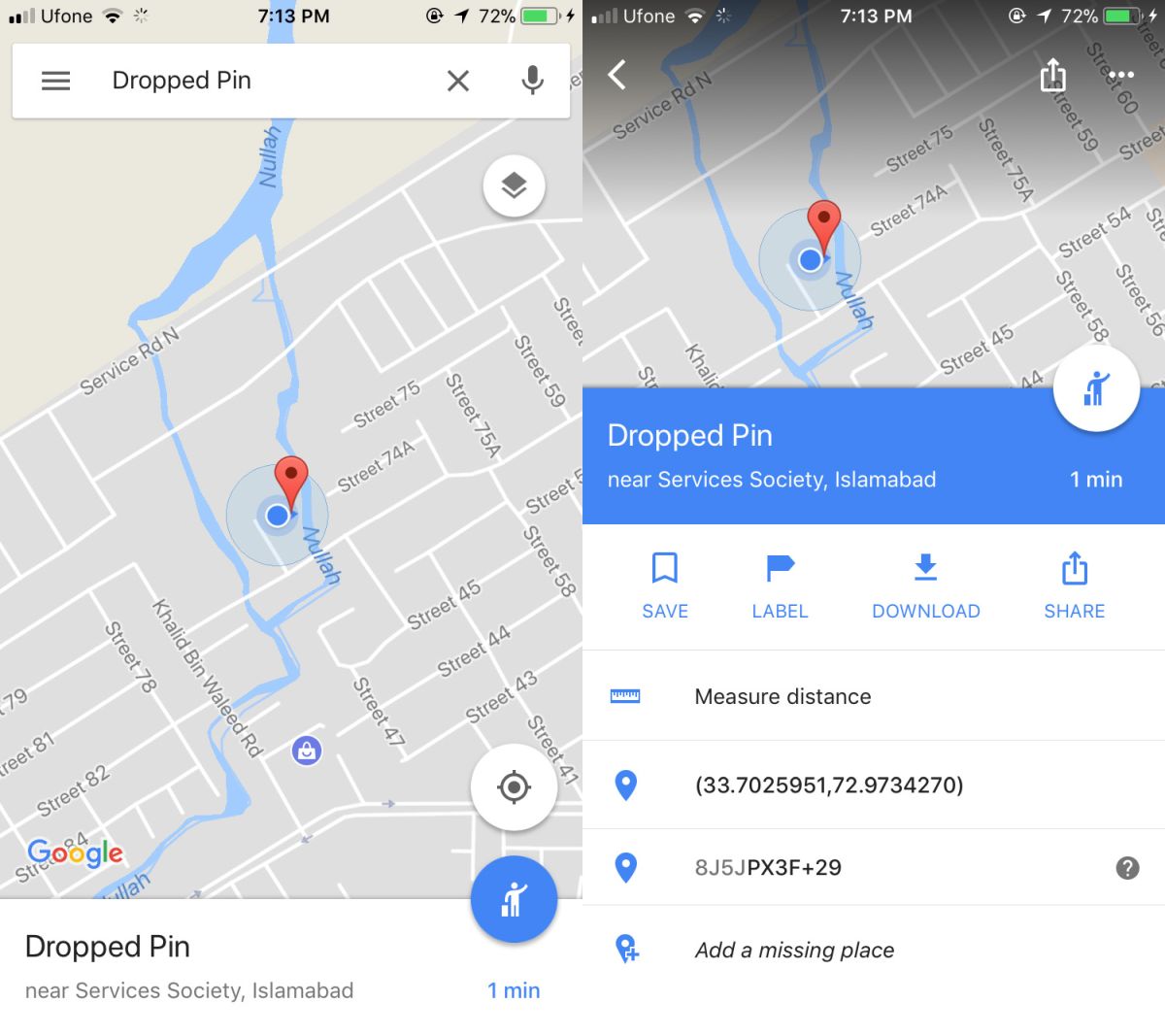
Open Google Maps and navigate to where you want to measure distance from. For example, if you’re home or at work, and you want to measure the distance to the nearest bus stop, drop a pin on your Home or Office.
Once you’ve dropped the pin, expand the menu at the bottom and tap the Measure distance option. You will see a location crosshair on your screen with a trailing line that marks the path you are drawing. This visual guide makes it easy to trace roads and paths accurately.
Position the crosshair over the first bend in the road you will take and tap ‘Add point’. The distance between the two points will appear at the bottom of the screen. You can continue to add as many points as you need to map out the full route between two places. With each point that you add, Google Maps updates the total distance in real time, so you always have an accurate running total.
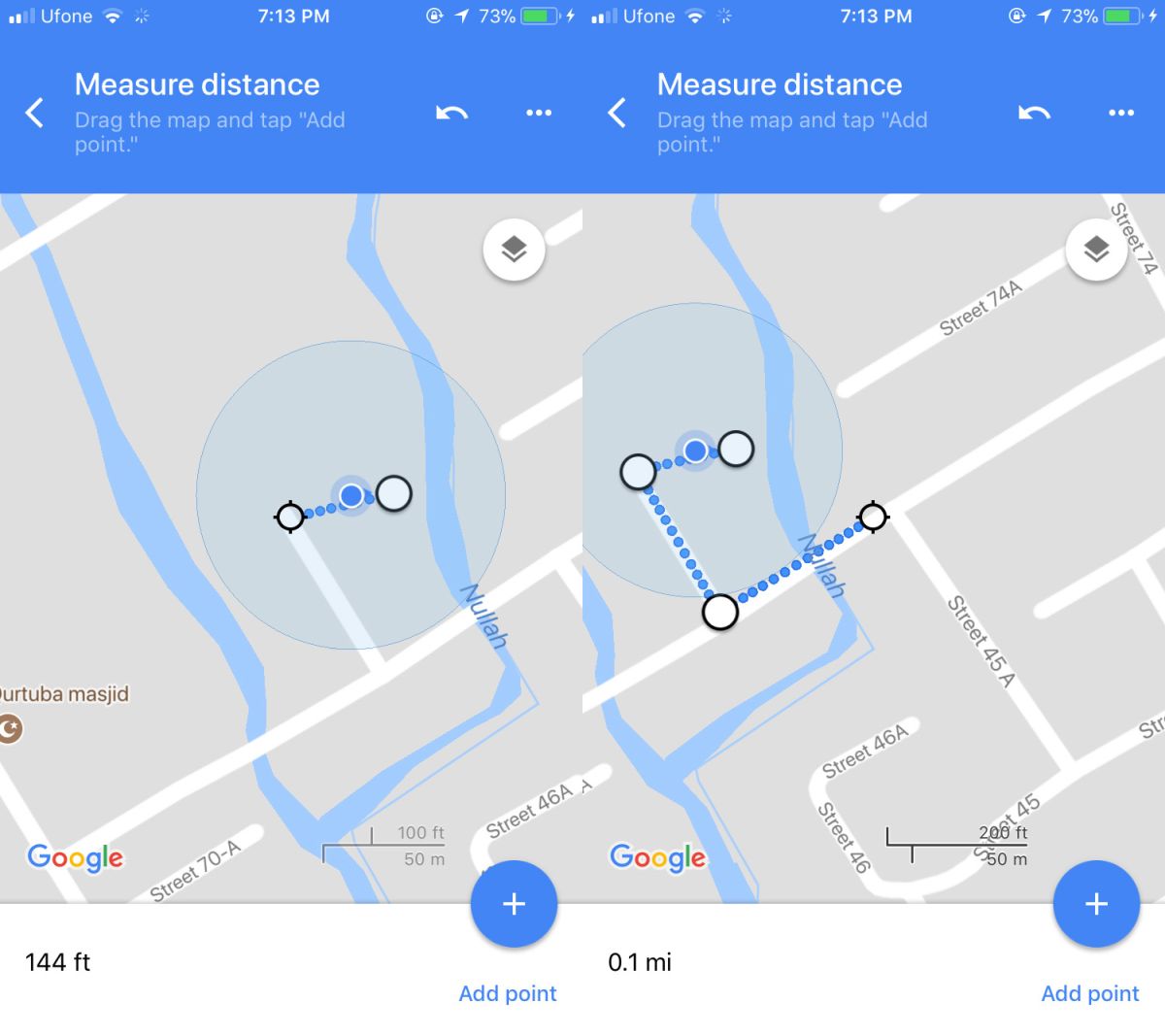
Once you’re done, tap the arrow on the Measure Distance bar at the top to return to the default map screen. You can also undo the last point added if you make a mistake, which is helpful when tracing complex routes with many turns.
It is worth noting that the Google Maps distance measurement feature works best when you zoom in on the map before adding points. A closer zoom level lets you place each point more precisely along the road, resulting in a more accurate final measurement. This is especially useful in areas with winding roads or dense street networks.
How to Measure Distance on Google Maps on Desktop
If you are planning a longer route or need precise point placement, the desktop version of Google Maps at maps.google.com is often the easier option. The larger screen gives you more control, and right-clicking to set points is typically faster and more accurate than tapping on a phone display. This makes desktop particularly well suited for city-to-city measurements or any route where you need to drop many points along the way.
Here is how to use the Measure distance tool on desktop:
- Open your browser and go to maps.google.com.
- Navigate to your starting location using the search bar or by panning the map.
- Right-click on the exact starting point on the map.
- Select Measure distance from the context menu that appears.
- Click your next point on the map. A line will appear connecting the two points, and a small card at the bottom of the screen will display the current distance.
- Keep clicking additional points to build out a custom path. The distance card updates automatically with each new point added.
- If you need to adjust the line, click and drag any existing point to a new position on the map.
- When you are finished, click the X in the distance card to clear the measurement and return to the standard map view.
Because you are working with a full-size screen and a mouse or trackpad, it is much easier to zoom in tightly and place points with precision, especially in areas with complex road layouts. Desktop is also the most practical choice when measuring between distant locations such as two cities or two countries, where you may only need one or two points to get the result you are looking for.
Google Maps Distance Measurement: Actual vs Vector Distance
When using the Google Maps distance measurement tool, it helps to understand that there are three distinct types of distance you might be working with, and each serves a different purpose.
The first is straight-line distance, sometimes called vector distance or “as the crow flies” distance. This is the direct distance between two points on the map, with no regard for roads, terrain, or anything in between. While it may seem less useful at first glance, straight-line measurement is actually a legitimate and common use case. If you want to know roughly how far one city is from another, or how far apart two countries are at their nearest points, a straight-line measurement gives you a clean, simple answer. Google Maps does not prevent you from measuring this way, and for geographic reference it can be exactly what you need.
The second type is a custom multi-point distance, which is what you build manually by adding a series of points along a path. This method lets you trace roads, walking trails, or cycling routes and get a total distance for the full path. It is more realistic than a straight-line result because it accounts for the actual route you plan to take. That said, it is still an approximation. Because you are placing points by hand, the tool cannot account for turn restrictions, road closures, or the routing logic Google applies in its navigation system. The more carefully you place your points and zoom in, the closer your result will be to the real-world distance.
The third type is turn-by-turn route distance, which comes from the Directions tool rather than the Measure distance feature. When you use Directions for driving, walking, or cycling, Google Maps calculates the distance along an actual navigable route, taking into account road rules, one-way streets, and current road data. If you need to know the precise distance for a trip you intend to drive or walk on known roads, Directions will give you a more reliable figure than manual measurement.
In short: use straight-line measurement for quick geographic comparisons including city-to-city or country-to-country checks, use manual multi-point measurement for custom paths like trails or unmapped routes, and use the Directions tool when you need an accurate driving or walking distance on established roads.
Keep in mind that this tool is ideal for planning walking routes, cycling paths, or any journey where standard turn-by-turn navigation may not apply. It gives you full control over the route you trace, making it a versatile addition to the Google Maps feature set.