🙃 Upside Down Emoji Meaning: Uses, Tone & Examples
Emojis have become a key part of our digital communications. They often provide an emotional context to our texts and social media posts. You can find emojis in Microsoft Teams, Windows, and other apps like Firefox. However, the vast amount of unique emojis leaves us struggling to keep up with what they really mean.
The upside-down emoji and its 🙃 meaning is a cause of confusion for many people. The meaning attached to this emoji is not as straightforward as you think.
Official Meaning and Origin of the 🙃 Emoji
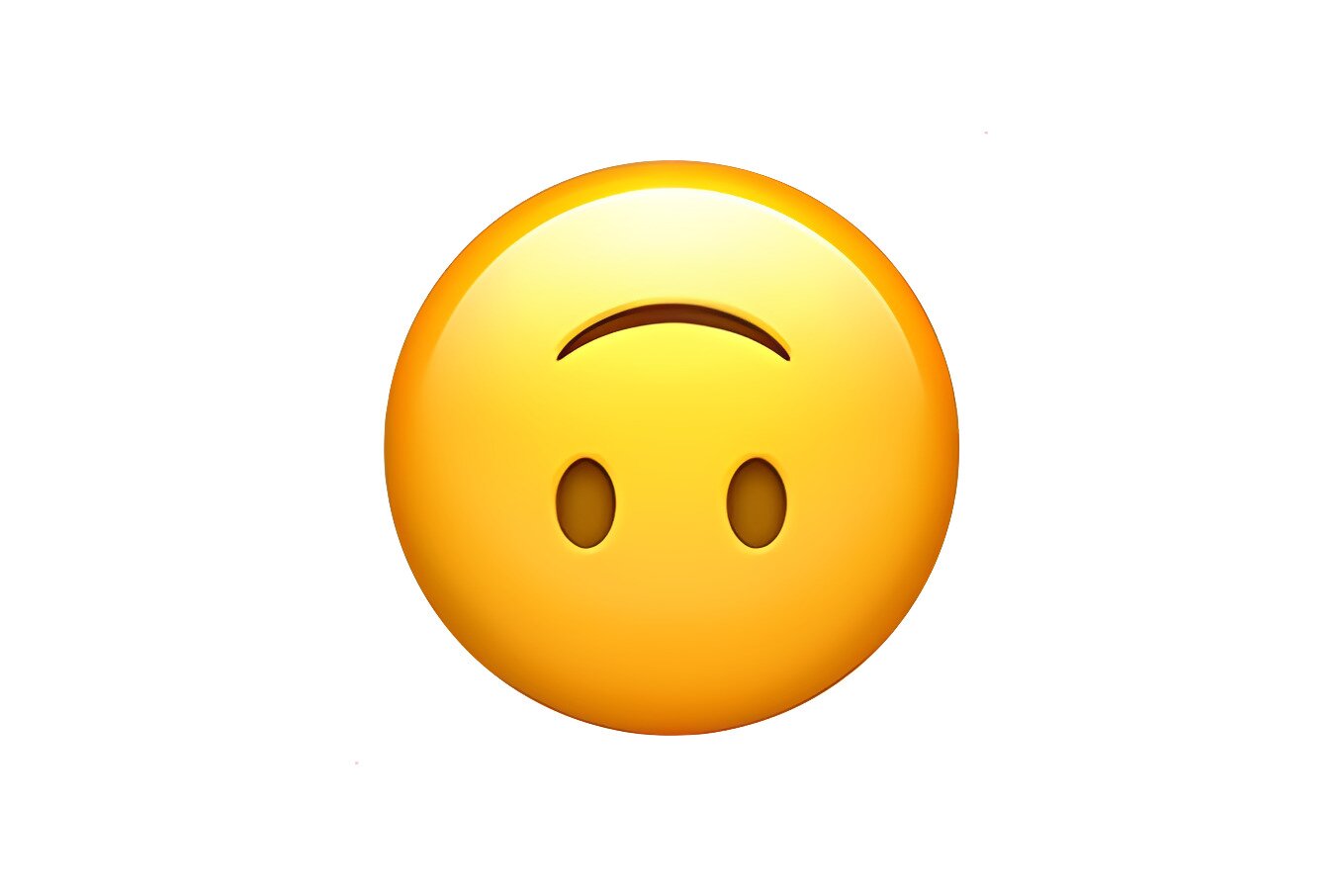
Before diving into all the ways people use it, here are the baseline facts. The 🙃 emoji’s official name is Upside-Down Face. It was approved as part of Unicode 8.0 and added to Emoji 1.0 in 2015, making it one of the original set that shipped alongside widespread smartphone adoption.
On most platforms — including Apple, Google, Samsung, and WhatsApp — it appears as a direct mirror image of the 🙂 Slightly Smiling Face, with the mouth curving upward but the whole face flipped. Microsoft’s older design was a notable exception: it displayed a full-toothed grin, which gave the emoji a more unhinged, awkward quality. That subtle design difference is worth knowing because it can change how the emoji lands depending on the device your recipient is using.
Understanding the 🙃 Meaning: What Does This Emoji Really Say?
The meaning of the upside-down emoji can shift depending on the context and the sender’s personality. Like a chameleon of the emoji world, the emoji adapts seamlessly to its surroundings.
But generally, it conveys a sense of silliness, light-heartedness, or goofiness. It’s like saying, “I’m just kidding!” or “This is all in good fun.”
It can also convey sarcasm or irony, which tells the recipient that your words shouldn’t be taken literally. Understanding the full range of what this emoji communicates is key to using it effectively.
Here is a practical breakdown of the most common readings, roughly in order from most to least frequent:
- Sarcasm or irony: The most common use by far. It signals that your words should not be taken at face value. Example: “Oh great, another Monday 🙃” (said after something goes wrong)
- Playful silliness: A digital wink that says “I know this is ridiculous.” Example: “I spent 20 minutes looking for my phone while talking on it 🙃”
- Self-deprecating embarrassment: Used after a self-own or awkward moment to soften the sting. Example: “Introduced myself twice to the same person at work 🙃”
- Passive-aggressive or resigned frustration: Signals “I’m annoyed but what can I do.” This is the reading to reach for after bad news or a repeated inconvenience. Example: “They moved the meeting again 🙃”
- Flirty teasing: Adds a layer of playful mischief. Example: “You’re absolutely terrible 🙃” (said after a cheeky joke)
- Mild confusion (secondary): Less common, but occasionally used to signal “I’m not quite following.” Example: “Wait, so what time does it start again? 🙃”
Many people also use 🙃 as a tone marker — similar to adding “jk” or “/s” at the end of a message — to flag that what they just wrote should not be read fully literally. If you see it tacked on after a strong or dramatic statement, that is usually a cue to take the message with a grain of salt.
Upside-Down Emoji for Humor and Silliness
When used in a lighthearted context, the upside-down face emoji can add a playful touch to your message. It gives the recipient a sort of digital wink, letting them know not to take the message too seriously. For example:
- Just tripped and fell in front of everyone🙃
- Wore my pajamas to the grocery store today 🙃
In this context, the emoji emphasizes the humor of the situation. You’re laughing at yourself and not taking things too seriously.
The 🙃 Meaning When Used for Frustration and Sarcasm
Alternatively, the upside-down emoji can also convey a sense of frustration, awkwardness, or even passive aggression. It can be used to express discontent without being overly negative. For example:
- Sure, I’d love to work a double shift this weekend🙃
- Oh, that’s just great🙃
(said after something unfortunate happens)
In this case the emoji expresses an underlying feeling of annoyance or displeasure. It’s like saying, “I’m not happy about this, but I’ll go along with it.”
Did You Know: You Can Also Flirt Using the Upside-Down Emoji?
The upside-down emoji can even be used in a flirtatious context. Using it can add a touch of playfulness and intrigue to your messages, suggesting a sense of humor and lightheartedness. For example:
- You’re so bad🙃
(said in response to a cheeky comment) - I can’t stop thinking about you🙃
(accompanied by a suggestive emoji)
In these situations, the upside-down face emoji adds a layer of “I’m just teasing, but I’m also kinda serious” to your message. It keeps things fun and flirty without being overly forward.
The 🙃 Meaning Can Also Cause Confusion
Thing is, the emoji also looks like you’re tilting your head, sort of like when you’re genuinely confused about something in real life. For example:
- I’m not sure what you mean by that 🙃
- Wait, what just happened? 🙃
In these cases, the emoji shows that you’re a bit perplexed and seeking clarification. This is one reason why the 🙃 meaning can be so tricky to pin down — it truly depends on the moment.
Because this emoji is so easy to misread, it helps to have a few practical ground rules for both sending and receiving it:
- Use it mainly with people who already know your tone. Close friends and regular contacts will read it correctly. Acquaintances and new contacts may not.
- Avoid it in work, customer-service, or emotionally sensitive messages. Sarcasm and passive aggression can land very differently in a professional context, and 🙃 is a shorthand for both. When in doubt, write out what you actually mean.
- Pair it with clearer text when flirting or joking with someone new. On its own, the emoji is ambiguous. Adding a word or two — “jk,” “haha,” or even “seriously though” — removes the guesswork.
- If you receive it after a complaint, awkward update, or inconvenience, read it as annoyance or resigned frustration — not happiness. A smiling face that is upside down is rarely a sign that everything is fine. The irony is almost always the point.
- If the tone still feels unclear, just ask. A quick “wait, are you annoyed or just messing with me?” is far better than misreading the room.
So, what does the upside-down emoji mean ultimately? Short answer: It depends!
Like any form of communication, it’s open to interpretation. Pay attention to the surrounding text, as the kids say, “Context is important.” Factor in the context of the conversation, and of course, the relationship you have with the sender, to get a better grasp of their intended meaning.
If you’re ever unsure, don’t hesitate to ask for clarification because, after all, clear communication is key, even in the world of emojis 😉
Feel free to copy the upside-down emoji as it’s seen on this page, or visit an emoji website like this one to copy the upside down face.