WSG Meaning in Text: What It Means and How to Reply
You’re mid-conversation with someone and they just sent you “wsg” — and now you’re staring at your phone wondering what it means and whether your reply is going to make you look completely out of the loop. You’re not alone. WSG meaning in text is one of the most searched slang questions in the U.S. right now, and it shows up constantly on Snapchat, TikTok, Instagram DMs, and everyday group chats.
This guide breaks down exactly what WSG means in text, how people use it, how tone changes everything, what it looks like in real conversations, and what to say back — no matter who sent it.
What Does WSG Meaning in Text Actually Tell You?
WSG = “What’s good?”
WSG stands for “What’s good?” — a casual, informal way of saying hello, checking in, or starting a conversation. It’s the texting equivalent of walking up to someone and asking how they’re doing, except shorter, faster, and a lot more common among younger users.
Think of it as a compressed greeting. Instead of typing out “What’s good with you?” or “Hey, what’s going on?”, someone just fires off “wsg” and waits for you to respond. It’s low-effort in the best way — it’s not rude, it’s just how a lot of people talk in digital spaces today.
The abbreviation became popular through Gen Z slang and social media culture, spreading rapidly on platforms where short, punchy messages are the norm. If you’ve been seeing it more often lately, that’s because WSG meaning in text has genuinely become one of the most common informal greetings in American messaging. Just like what does wdym mean, WSG is part of a broader trend of abbreviating common phrases to keep conversations quick and efficient. If you’re decoding similar terms, this messaging slang guide is a helpful next read.
How it compares to “what’s up” and “how’s it going”
WSG, “what’s up,” and “how’s it going” all serve the same basic social function — they’re openers that signal friendliness and invite the other person to share what’s on their mind. But there are subtle differences worth knowing.
“What’s up” has been around since at least the 1980s and is understood by virtually every age group. “How’s it going” leans slightly more formal and is used across generations. WSG, on the other hand, skews younger — it’s firmly in Gen Z and younger Millennial territory, and using it in the wrong context can feel forced or out of place.
The key similarity is that none of these greetings actually demand a detailed answer. They’re social lubricant, not genuine requests for a status report. When someone texts you “wsg,” they’re usually just saying hi and opening the door for a chat.
How People Use WSG in Messages
As a casual greeting
The most common use of WSG is simply as a hello. Someone texts you “wsg” the same way they might wave at you across the room — it’s low-stakes, friendly, and doesn’t require much back from you. You’ll see this especially in conversations between close friends who talk regularly.
In this context, “wsg” is almost interchangeable with “hey” or “yo.” It’s not asking for a deep answer; it’s just checking that you’re there and open to talking.
As a check-in
Sometimes WSG carries a little more weight — it’s used to check in on someone you haven’t spoken to in a while. A friend who went quiet for a week might text “wsg” as a gentle way of re-opening the line of communication without making things awkward.
In this case, the subtext is closer to “Hey, I’ve been thinking about you — how are things?” It’s warmer than a simple “hey” but still casual enough that neither person has to commit to a heavy conversation.
As a conversation starter
WSG also works as a blank-slate conversation opener. The person sending it doesn’t necessarily have a specific topic in mind — they just want to see where things go. It’s an invitation to fill the space with whatever’s on your mind.
This use is especially common on Snapchat and Instagram DMs, where someone might send “wsg” after seeing your story or just because they felt like talking. There’s no hidden agenda — they’re just opening the door.
As a flirty opener
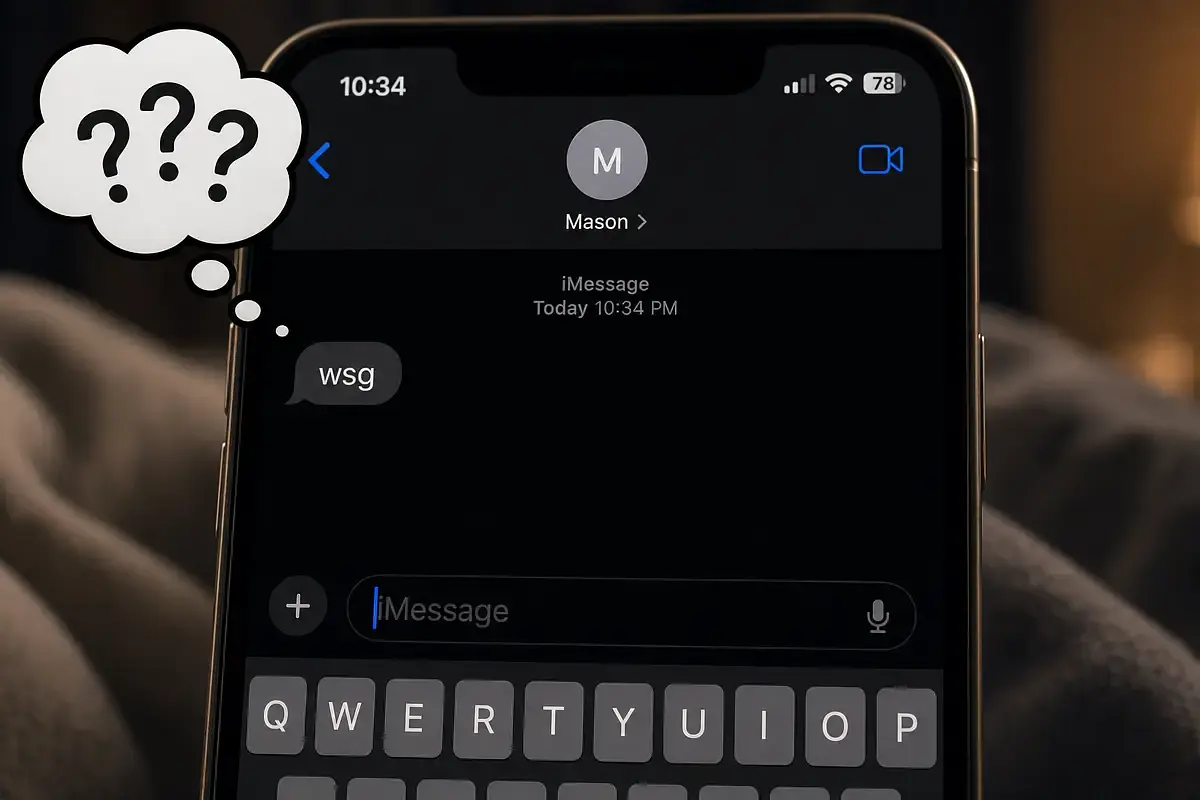
Here’s where things get a little more interesting. WSG can absolutely be used as a flirty opener, especially when it comes from someone you have a romantic dynamic with. If you’ve been wondering about WSG from a girl meaning or whether a message from your crush carries extra weight, context is everything.
When someone you’re interested in texts you “wsg” late at night, or follows up a flirty exchange with it, the meaning shifts. It’s still technically “what’s good?” but the energy behind it is different — it’s an invitation to flirt back. We’ll get into how to read those signals more in the tone section below.
How Tone Changes the Meaning of WSG
One of the trickier things about slang like WSG is that the same three letters can mean very different things depending on how they’re delivered. Tone in texting is communicated through punctuation, capitalization, emojis, timing, and the overall context of the relationship.
Friendly and neutral uses
The default meaning of WSG is friendly and neutral. No punctuation, lowercase letters, maybe sent in the middle of the afternoon — this is just someone saying hi. There’s nothing loaded about it, and a simple, relaxed reply is all that’s needed.
This is the most common version you’ll encounter, and it’s the one that fits the basic wsg meaning in chat that most people are looking for when they search the term.
Playful or funny uses
Sometimes WSG gets a playful spin, especially when it’s paired with a funny GIF, a meme, or sent right after something ridiculous happened. In this case, it functions more like “okay but what even is going on right now?” — a reaction as much as a greeting.
You’ll see this a lot in friend groups where the humor is dry or chaotic. The tone is light, and the best response usually matches that energy.
Flirty uses
Is WSG flirty? It can be, depending on who’s sending it and when. A “wsg 😏” or a “wsg stranger 👀” carries obvious flirty energy. The emoji does a lot of the heavy lifting here — without it, the same message might just be friendly.
If someone you’re romantically interested in sends you WSG with a flirty emoji or in a context where you’ve been building chemistry, it’s reasonable to read it as an invitation to be playful or coy in return. We’ll cover specific flirty replies in the response section.
Dry, annoyed, or confrontational uses
This one surprises people, but WSG can occasionally carry a dry or even confrontational tone — especially when capitalized. “WSG” in all caps, or “wsg.” with a period, can signal that someone is not in the mood for small talk and wants to know what’s actually going on. In more heated exchanges, you might even encounter aggressive slang like BTFO slang meaning, which takes confrontational messaging to another level entirely.
Imagine someone who just saw something confusing on your Instagram story texting you “WSG” — in that context, it’s closer to “what is going on with you?” than a friendly hello. It’s rare, but it happens.
How emojis, punctuation, and capitalization affect tone
Here’s a quick breakdown of how small details shift the feel of WSG:
- “wsg” — Standard, neutral, friendly
- “WSG” — Can feel more intense, urgent, or confrontational
- “wsg?” — Slightly more curious or pressing
- “wsg 😊” — Warm and genuinely friendly
- “wsg 😏” — Flirty
- “wsg lol” — Casual, maybe a little awkward or self-aware
- “wsg.” — Dry, possibly passive-aggressive
Reading these cues correctly helps you respond in a way that matches the energy of the conversation. Understanding WSG meaning in text goes beyond the dictionary definition — it’s about reading the whole message. Similarly, knowing the DW message meaning helps you interpret reassuring messages like “don’t worry” in the right context.
What Does WSG Mean on Snapchat, TikTok, and Other Apps?
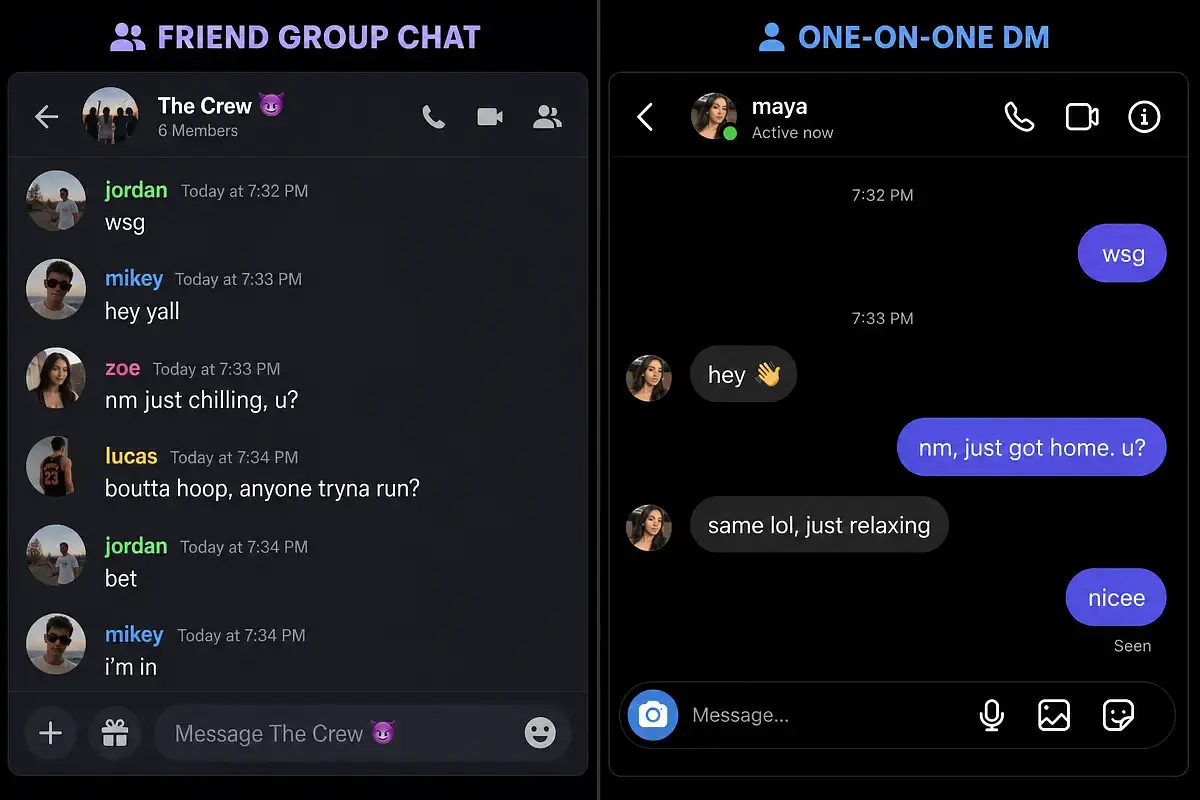
The core wsg meaning stays the same across platforms, but the way it gets used can shift depending on the app’s culture and features.
WSG on Snapchat
Snapchat slang WSG is extremely common because Snapchat is built around quick, low-effort communication. Sending “wsg” on Snap is often a streak-maintenance move — a way to keep a streak alive while also genuinely checking in. It’s also used as an opener after someone views your story, which is a classic Snapchat social dynamic.
Because Snaps disappear, the conversations tend to be more casual and spontaneous, which makes WSG a perfect fit. It’s quick, it’s friendly, and it doesn’t demand a long reply. The WSG meaning in text carries over seamlessly to Snapchat’s fast-paced format.
WSG on TikTok
On TikTok, WSG shows up in comments, DMs, and even in video captions. What does WSG mean on TikTok is a common question because the platform has its own slang ecosystem. Here, WSG might appear in a comment section as a way of tagging a friend (“wsg @username”) or in a DM after someone watches your video and wants to connect.
TikTok’s culture is highly trend-driven, and WSG has appeared in audio clips, skits, and videos about Gen Z communication styles, which has helped cement it as a recognized part of the platform’s slang vocabulary. Research from the Pew Research Center highlights how deeply Gen Z is embedded in social media platforms where this kind of shorthand thrives.
WSG on Instagram DMs
Instagram DMs are where WSG often carries the most social weight, because sliding into someone’s DMs is already a deliberate act. When someone sends you “wsg” in an Instagram DM — especially after watching your story — it’s usually either a genuine attempt to reconnect or a flirty opener.
WSG in social media DMs tends to be more intentional than a Snapchat streak message. The person chose to reach out, which adds a layer of meaning to even a simple three-letter greeting.
WSG in regular text messages and group chats
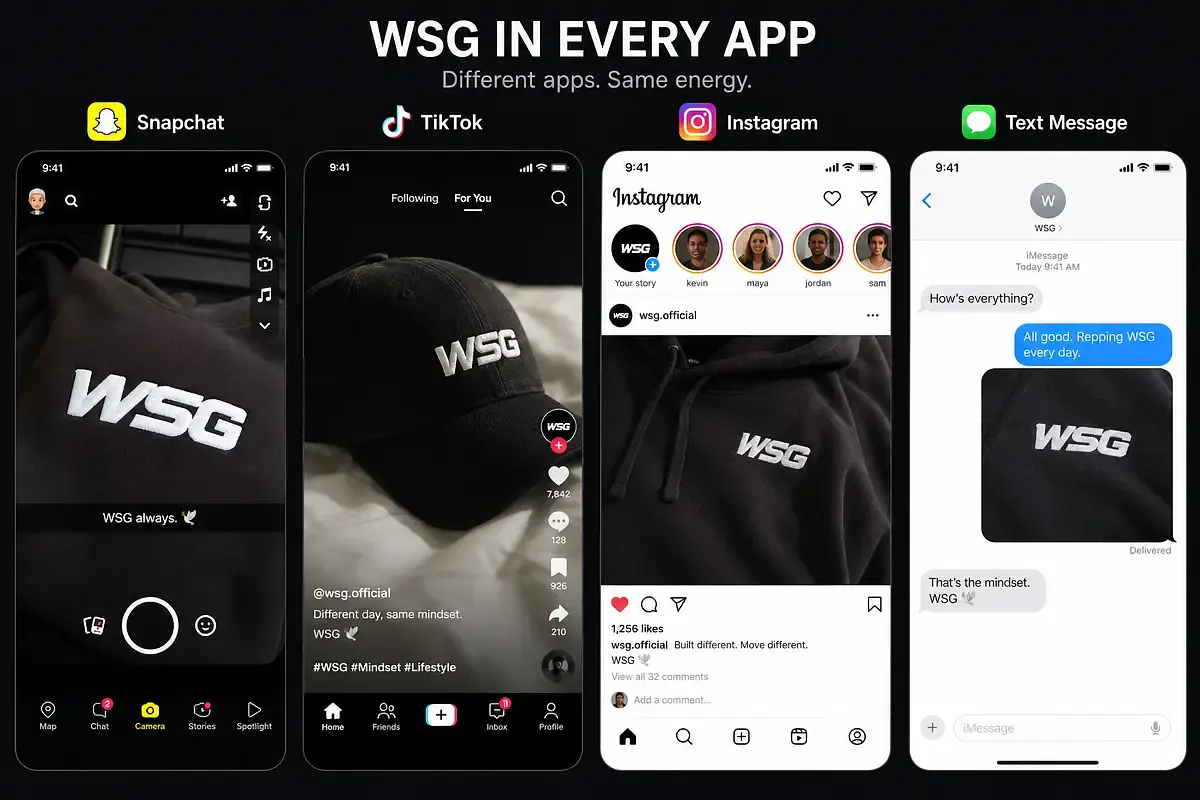
In standard SMS or iMessage conversations, WSG functions almost identically to “what’s up” — it’s a friendly opener between people who already know each other. In group chats, it’s often used to get everyone’s attention or kick off a conversation about plans.
WSG in texting between close friends is extremely low-pressure. Nobody’s reading deeply into it — it’s just how people say hi now. Once you understand WSG meaning in text, you’ll recognize it everywhere.
How to Respond to WSG
Knowing what WSG means is only half the battle — the other half is knowing what to actually say back. The good news is that responding to WSG is genuinely easy once you understand the context.
Simple replies if you want to keep it casual
If you want to keep things light and easy, any of these work perfectly:
- “Not much, you?”
- “Nothing really, wbu?” (wbu = what about you)
- “Just chilling, hbu?”
- “Same old, what’s up with you?”
- “All good, you?”
These replies match the casual energy of WSG without overthinking it. They acknowledge the greeting and bounce the conversation back to the other person, which is exactly what a good opener response should do. Just like understanding NM text meaning, HM text meaning, or NR slang meaning, knowing how to respond to casual abbreviations keeps the conversation flowing naturally.
Funny replies
If you have a playful dynamic with the person, a funny reply can land really well:
- “My blood pressure, apparently”
- “Chaos, as usual”
- “Absolutely nothing and somehow still stressed”
- “Living the dream (the weird one)”
Humor signals that you’re comfortable with the person and willing to be a little unguarded, which usually makes for a better conversation.
Flirty replies
If the message came with flirty energy and you want to match it, try:
- “You, hopefully 😏”
- “Thinking about you, actually”
- “Better now that you texted”
- “Depends — are you trying to make plans?”
These wsg reply examples work because they’re playful without being over the top. They signal interest while keeping things light enough that neither person feels put on the spot.
Replies when you do not want to talk much
Sometimes you get a “wsg” when you’re busy, tired, or just not in the mood for a full conversation. That’s okay — you can be honest without being rude:
- “Kinda swamped rn, ttyl?”
- “All good, just busy today”
- “Not much, can’t really talk rn”
These replies acknowledge the message without leaving the person on read, which is the polite move even when you’re not up for chatting. If you’re feeling left out of plans and want to express it, you might even respond with something like TFTI meaning in text — a sarcastic way to say “thanks for the invite” when you weren’t actually invited.
Best replies based on who sent it
How to respond to WSG also depends on your relationship with the sender:
- Close friend: Match their energy — casual, funny, or whatever fits your dynamic
- Acquaintance: Keep it friendly but brief (“Not much, you?”)
- Crush or romantic interest: If the vibe is there, lean into something a little warmer or more playful
- Someone you haven’t talked to in a while: A warm but simple reply works — “Hey! Not much, been a minute”
- Someone you don’t know well: Keep it neutral and let the conversation develop naturally
Real Examples of WSG in Conversation
Sometimes the best way to understand how a word works is to see it in action. Here are a few realistic conversation examples that show how WSG plays out differently depending on the relationship and context.
Example: friend to friend
Jordan: wsg
Alex: not much just watching tv, you?
Jordan: same lol wanna grab food later
Alex: yeah for sure, where you thinking
This is the most typical version of a WSG exchange. It’s quick, low-pressure, and moves naturally into making plans. Nobody’s overthinking the opener — it’s just a way to check that the other person is around before getting to the actual point.
Notice that Alex doesn’t respond with a long answer about their day. That’s intentional. WSG meaning in text doesn’t invite a monologue — it invites a short, friendly exchange that leads somewhere else. The whole thing takes about thirty seconds and feels completely natural. If Jordan had shared something surprising during the conversation, Alex might have replied with TIL meaning in text to acknowledge learning something new.
Example: crush or flirt
Sam: wsg stranger 👀
Riley: oh so now I’m a stranger lol
Sam: you’ve been MIA all week what am I supposed to think
Riley: fair enough, what are you up to tonight?
Here, the WSG is doing a lot more work. The “stranger” addition and the eye emoji signal that Sam is being playful and a little teasing — there’s obvious flirty energy. Riley picks up on it immediately and plays along rather than giving a straight answer to “what’s good.”
This is a good example of why reading the tone matters. If Riley had responded with a flat “not much, you?” it would have deflated the energy Sam was building. Matching the playfulness keeps things interesting.
Example: group chat or social media DM
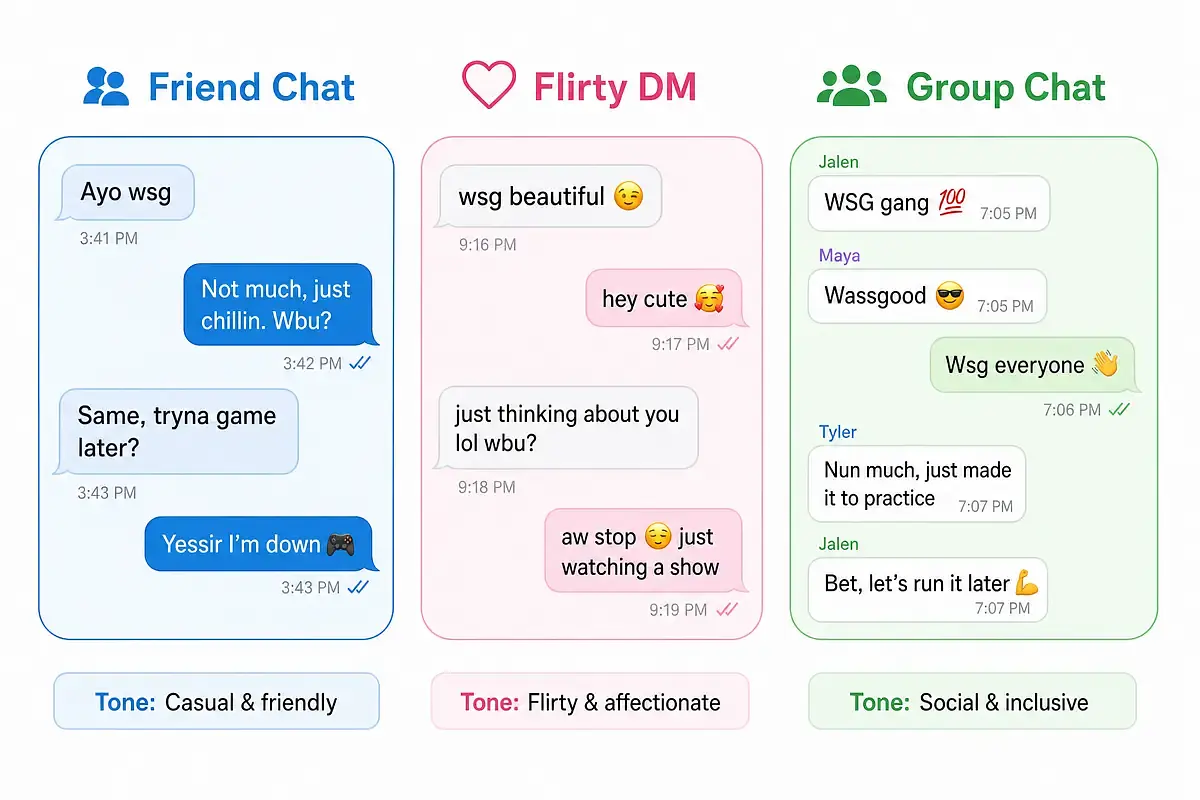
Marcus: wsg everyone, anyone free Saturday?
Destiny: I’m free after 3
Priya: same, what’s the plan
Marcus: thinking bowling or something idk
In a group chat, WSG functions almost like calling a meeting to order — it’s a way to get everyone’s attention and signal that something’s about to be proposed. Marcus isn’t really asking how everyone is doing; he’s using WSG as a soft opener before getting to the actual question about Saturday.
This is also common in social media DMs when someone slides in after seeing a story. The “wsg” is a low-commitment way to