How to Play Fortnite Unblocked at School: Quick Answer and Best Methods
You can play Fortnite unblocked at school in three main ways. Use browser-based cloud gaming, a VPN on a personal device, or skip school Wi-Fi with a phone hotspot. Your best option depends on your device and how strict your school’s network is.
The sections below cover every working method for getting Fortnite unblocked at school. That includes Chromebook play, no-download options, what to do when now.gg is blocked, mobile fixes, hotspot fallback, and how to play without a VPN. For the fastest fix, start with our top VPN picks below, then find your device in the table.
| Device Type | Best Method | Works Without Download | Policy / Risk Level |
|---|---|---|---|
| School Chromebook (managed) | Cloud gaming via now.gg in Chrome | Yes | Low–Medium — no install, but gaming sites may be filtered |
| Personal Chromebook (unmanaged) | VPN extension from Chrome Web Store + cloud gaming | Yes | Low on personal device; medium on school Wi-Fi |
| Windows or Mac laptop (personal) | VPN with obfuscation, then Fortnite or cloud gaming | No (Fortnite client) / Yes (cloud gaming) | Medium — VPN use on school Wi-Fi may break acceptable use policy |
| Phone (iOS or Android) | Switch to mobile data, then use Epic Games app | No — app install needed | Low — mobile data bypasses school network |
| Console (PS5, Xbox, Switch) | Phone hotspot for internet, then launch Fortnite | No — game must be installed | Low — school network not involved |
Top VPN Picks for Getting Fortnite Unblocked at School
If you’re on a personal device, a VPN with obfuscation is the most reliable way past school Wi-Fi filters. These are our tested picks. All support mobile, all work on school networks, and all offer obfuscated or stealth protocols that hide VPN traffic as regular HTTPS.
| VPN | Obfuscation / Stealth | Mobile Support | Starting Price | Get Deal |
|---|---|---|---|---|
| NordVPN | Yes — obfuscated servers | iOS & Android | From $3.39/mo | Get Deal |
| ExpressVPN | Yes — Lightway stealth mode | iOS & Android | From $4.99/mo | Get Deal |
| Surfshark | Yes — Camouflage mode | iOS & Android | From $2.19/mo | Get Deal |
| IPVanish | Yes — scramble protocol | iOS & Android | From $2.19/mo | Get Deal |
| Private Internet Access | Yes — MACE + obfuscation | iOS & Android | From $2.03/mo | Get Deal |
Not sure which one fits your setup? See the full best VPNs for school Wi-Fi comparison with speed tests and Chromebook notes.
The rest of this guide covers every scenario in detail. Jump to the section that fits your situation:
- School Chromebook — run Fortnite unblocked at school in your browser with zero installs, plus what to do when now.gg is blocked
- No-download play — cloud gaming options that work on any device, including Xbox Cloud Gaming and GeForce NOW
- now.gg blocked — step-by-step fallback options when your school filters cloud gaming platforms
- Hotspot fallback — connect your device to mobile data and skip the school network
- Mobile — play on iOS or Android using cellular data, with data usage estimates
- Without a VPN — hotspot and cloud gaming methods that need no VPN software
Why Fortnite Is Blocked at School and What the Risks Are
Schools block Fortnite for a few clear reasons. Knowing which one applies to you helps you pick the right fix for getting Fortnite unblocked at school.
- Firewall or DNS filtering: Most schools run content filters that block gaming domains at the network level. Fortnite’s servers get flagged, so traffic never reaches them.
- Category-based gaming blocks: Many filters don’t target Fortnite alone. They block the entire “online gaming” category, which sweeps up Epic Games, now.gg, and most cloud gaming platforms.
- Bandwidth management: Gaming traffic is data-heavy. Schools throttle or block it to keep the network usable for everyone.
- Admin limits on managed devices: School-issued Chromebooks often have device-level policies. These stop you from installing apps or changing network settings, regardless of the Wi-Fi filter.
One thing to clarify before you try any fix: a school Wi-Fi block is not the same as an Epic Games ban. If Fortnite works fine at home but you see a suspension message, that’s an Epic issue. No VPN or hotspot will fix an account-level ban. Contact Epic Games support directly for account issues.
Fortnite has an ESRB Teen rating, but schools rarely single it out. The block almost always comes from a broad gaming policy, not a Fortnite-specific rule.
Before you try any method
Run through this quick risk check:
- Legality: VPNs are legal in the United States. Using one is not a crime.
- School policy: Bypassing your school’s content filter likely breaks its acceptable use policy. Know the rules before you act.
- Device risk: School-issued devices may log activity or flag violations. Using a personal device on mobile data removes most of this risk.
Also keep in mind: schools increasingly block VPN traffic, now.gg, and other cloud gaming platforms. That’s exactly why this guide covers multiple methods. If one is blocked, another usually isn’t.
How to Get Fortnite Unblocked at School on a Chromebook (No Download Required)
Getting Fortnite unblocked at school on a Chromebook is simpler than most students expect. The method below needs zero installs, zero admin permissions, and nothing saved to the device. The key is cloud gaming: the game runs on a remote server and streams to your Chrome browser.
Here’s the fastest way to get started
- Open Chrome on your Chromebook and go to now.gg.
- Search for Fortnite using the site’s search bar.
- Sign in with your Epic Games account when prompted.
- Click Launch — the game loads in your browser tab. No install needed.
This works on school-managed Chromebooks because nothing is installed locally. The game never touches the device’s storage. Launching a website doesn’t need admin permissions the way installing an app does. As long as now.gg isn’t blocked on your school’s network, you’re good to go.
If you’re on a personal or unmanaged Chromebook, you have extra options. Google Play Store access lets you install a VPN app directly, or add a VPN extension from the Chrome Web Store.
Either one lets you route around network-level blocks before you open now.gg. For a full walkthrough, see our guide on how to set up a VPN on a Chromebook. School-issued devices won’t have these options, which is why the browser method is the go-to for most students who want Fortnite unblocked at school.
A note on performance
Cloud gaming is only as smooth as your connection. On a stable school Wi-Fi signal, now.gg typically runs well enough for a full match. On a slow or congested network, you’ll notice lag. A strong personal hotspot is the most reliable fallback if school Wi-Fi is too slow or too filtered.
If now.gg is blocked on your school’s network: Don’t waste time hunting for mirror sites. Most are unreliable or flagged just as fast. Skip to the next section for what to do when now.gg is unavailable, including the hotspot method and other cloud platforms.
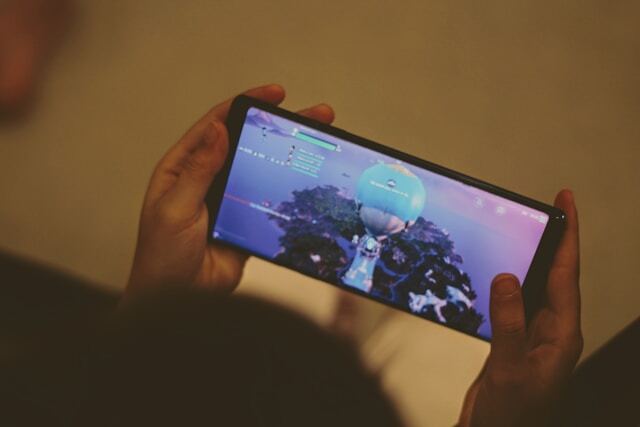
What to Do If now.gg Is Blocked at School
Schools often block now.gg the same way they block other gaming sites. It gets caught in content filters that flag entire categories, not just specific games. If you see a blocked page when you load now.gg on school Wi-Fi, the network is the problem, not your device.
Work through these options in order. Start with the simplest fix first.
- Switch to your phone’s mobile hotspot. This is the fastest fix. Enable the hotspot on your phone (Settings → Personal Hotspot on iPhone, or Settings → Hotspot on Android). Then open the Wi-Fi menu on your Chromebook and connect to your phone’s network. You’re now on mobile data, so the school’s filter no longer applies.
- Try a VPN browser extension. If you’re on a personal, unmanaged Chromebook, you can install a VPN extension from the Chrome Web Store. This only works on devices you own. Do not install anything on a school-issued Chromebook.
- Test an alternative cloud gaming platform. Xbox Cloud Gaming and GeForce NOW both stream games through a browser without a download. Note that Xbox Cloud Gaming needs a Game Pass Ultimate subscription. GeForce NOW has free and paid tiers. Sign-in needs and game availability differ from now.gg, so check before you commit.
If every cloud gaming site is blocked on school Wi-Fi, mobile data is your most reliable option. It bypasses the school’s network, so no filter can touch it.
The hotspot method works on any device and needs no installs or accounts. If you run into now.gg blocks often, keeping your phone’s hotspot as a backup is the most consistent solution for keeping Fortnite unblocked at school. For more advanced workarounds, you can also explore proxy methods for school networks, though these typically require more setup than a simple hotspot.
How to Play Fortnite Unblocked at School Without Downloading Anything
If you’re on a school computer or Chromebook and can’t install anything, you don’t need to. Browser-based cloud gaming is the answer. There’s no Epic Games launcher, no admin permissions, and no install needed. You stream Fortnite from a remote server, and it runs inside your browser like any other website.
Three platforms currently offer this in a form that works. Here’s how they compare:
| Platform | Account Required? | Subscription Needed? | Works on Chromebook? | Installs the Epic Launcher? |
|---|---|---|---|---|
| now.gg | Free account needed | No — free tier available | Yes, Chrome browser | No |
| Xbox Cloud Gaming | Microsoft account needed | Yes — Game Pass Ultimate | Yes, Chrome or Edge browser | No |
| GeForce NOW (browser mode) | NVIDIA account needed | Free tier available; paid tiers offer priority | Yes, Chrome browser | No |
None of these need you to install the Epic Games launcher. That’s the key detail for locked-down school computers. Everything runs through the browser, so software restrictions don’t apply. On a managed Chromebook, this is your most practical path to getting Fortnite unblocked at school.
Watch your data usage
Cloud gaming is data-heavy. Expect roughly 1–3GB per hour depending on the platform and stream quality. That’s fine if you’re on a hotspot for a short session, but it will drain a limited data plan fast. Check your monthly data allowance before you start.
Avoid unofficial browser versions
You may come across sites claiming to offer an unofficial browser version of Fortnite. These are not real. Epic Games does not publish a browser-based Fortnite outside of cloud gaming platforms. Stick to the three platforms listed above. They’re the only trusted, working options for no-download play.
If your school’s Wi-Fi blocks now.gg or other cloud platforms, switch to your phone’s mobile hotspot. That puts you on a separate network, free from your school’s content filters.
That combo — hotspot plus browser-based cloud gaming — covers the no-download use case on almost any school device and is one of the most reliable ways to keep Fortnite unblocked at school.
How to Use a VPN to Get Fortnite Unblocked at School
A VPN is the right tool for one specific situation. You’re on a personal laptop, phone, or unmanaged Chromebook connected to school Wi-Fi, and the network is blocking Fortnite’s servers or Epic-related domains.
In that case, a VPN reroutes your traffic through an outside server, bypassing the school’s content filter. This is a network-access problem, and that’s exactly what VPNs solve.
There’s one catch. Many school networks don’t just block gaming sites. They also detect and block standard VPN connections. That’s where obfuscation — sometimes called stealth protocols — matters.
Obfuscation hides your VPN traffic so it looks like normal HTTPS browsing. Without it, a strict school firewall can spot and drop your VPN connection before it works. With it, your traffic passes through undetected. If you’re going to use a VPN for school Wi-Fi, you need one that supports this feature.
3-step setup for getting Fortnite unblocked at school with a VPN
- Choose a VPN with obfuscation support. Not every VPN offers stealth protocols. Look for a VPN with obfuscation — these are built for networks that actively block VPN traffic, which is what most school firewalls do.
- Install it on your personal device. This only works on a device you control — a personal laptop, Android phone, or unmanaged Chromebook. School-issued devices often have MDM (mobile device management) software. MDM stands for mobile device management; it’s software that blocks VPN installs and can flag the attempt.
- Connect before opening Fortnite or a cloud gaming site. Launch the VPN app, connect to a server, and confirm the connection is active. Do this before you try to reach Epic’s servers or load a cloud gaming platform. Connecting after the fact won’t help if the initial request is already blocked.
| VPN | Obfuscation Support | Works on Mobile | Best For |
|---|---|---|---|
| NordVPN | Yes (Obfuscated Servers) | iOS & Android | Restrictive school networks |
| ExpressVPN | Yes (Lightway protocol) | iOS & Android | Speed + stealth on school Wi-Fi |
| Astrill VPN | Yes (StealthVPN) | iOS & Android | Highly restrictive firewalls |
Not sure which one fits your setup? See our full VPN recommendations →
What a VPN can and can’t do
Before you go this route, understand the limits:
- It may break your school’s acceptable use policy — even though VPNs are legal in the US, using one on school Wi-Fi could lead to a warning or device confiscation.
- It will not work on a school-managed device where MDM software is installed.
- It will not fix an Epic Games account ban — if Epic has restricted your account, hiding your IP is only a short-term workaround. Contact Epic support directly for account issues.
Getting Fortnite unblocked at school is a network problem, not a software problem. A VPN solves that — but only when you’re on your own hardware.
How to Play Fortnite at School Without a VPN: Hotspot and Mobile Options
If you don’t want a VPN, your two best options are a phone hotspot or a browser-based cloud gaming platform. Either one gets you around school filters without installing anything extra.
Option 1: Use your phone as a hotspot
A hotspot puts your laptop or Chromebook on a different network — your carrier’s cellular data — instead of school Wi-Fi. The school’s content filter only controls traffic on its own network. Once you’re on mobile data, those blocks don’t apply.
Here’s how to set it up:
- On your phone, open Settings and turn on the Mobile Hotspot or Personal Hotspot option. Give it a name and password you’ll remember.
- On a Windows laptop, click the Wi-Fi icon in the taskbar, find your hotspot’s network name, and connect with your password.
- On a Chromebook, click the system tray in the bottom-right corner, select the Wi-Fi icon, and choose your hotspot from the list.
- Once connected, open a cloud gaming platform like now.gg in your browser and launch Fortnite. No download needed.
Option 2: Play Fortnite on your personal phone
Fortnite is available on Android through the Epic Games app, which you can sideload from the Epic Games website. On iOS, the situation is more limited in some regions. However, Fortnite has returned to the App Store in the EU and is available via Xbox Cloud Gaming in a browser on any iPhone. Sign in with your Epic Games account, and your progress carries over from other platforms.
The key difference is your network. Playing on school Wi-Fi will likely get blocked the same way it does on a laptop. Switch to cellular data and the school filter is out of the picture — making this one of the simplest ways to keep Fortnite unblocked at school.
Data usage: what to expect
Before you burn through your data plan, here’s what each method actually uses:
- Native mobile play uses roughly 100MB per hour — fine for most data plans for a session or two.
- Cloud gaming over a hotspot (now.gg, Xbox Cloud Gaming, GeForce NOW) can use 1–3GB per hour. One long session can eat a big chunk of a standard monthly plan.
Choosing the right route
The right method depends on your device and how much data you have.
- School computer or Chromebook: Use your phone as a hotspot and open a cloud gaming platform in the browser. Nothing gets installed, and the school filter is bypassed.
- Personal phone only: Install the Epic Games app and play on cellular data. It uses the least data and has the simplest setup.
Neither option needs a VPN. Both work because they route your traffic away from the school’s network.
Fortnite Alternatives You Can Play Unblocked at School
If your school blocks Fortnite, now.gg, VPNs, and cloud gaming platforms all at once, you still have options. These browser-based alternatives let you keep gaming even when every method for getting Fortnite unblocked at school has been shut down.
The browser-based games below run in Chrome or any standard browser with no download, no installer, and no admin permissions needed. They won’t replace Fortnite, but they’re real, well-kept games — not sketchy mirror sites.
| Game | What It Is | Browser or Download? | Official Site |
|---|---|---|---|
| ZombsRoyale.io | A fast 2D battle royale with up to 100 players — the closest browser match to Fortnite’s core loop. | Browser only — no download needed | zombsroyale.io |
| Krunker.io | A first-person shooter with short match times and a large active player base. | Browser only — no download needed | krunker.io |
| Shell Shockers | A quirky egg-themed FPS that runs well even on low-spec school computers. | Browser only — no download needed | shellshock.io |
| ev.io | A polished 3D arena shooter built on web tech, with better graphics than most browser games. | Browser only — no download needed | ev.io |
If you need a VPN for a short while when traveling for example, you can get our top ranked VPN free of charge. NordVPN includes a 30-day money-back guarantee. You will need to pay for the subscription, that’s a fact, but it allows full access for 30 days and then you cancel for a full refund. Their no-questions-asked cancellation policy lives up to its name.