Remove Duplicate Music Files With Similarity
If you need to remove duplicate music files from your collection, you are not alone — it is one of the most common digital housekeeping tasks for music lovers. We have covered two posts before on removing duplicate audio files. Both DoubleKiller and Audio Comparer can find and remove similar audio files. But since no single tool is 100% accurate, it is always a good idea to test multiple software options before settling on one.
Why Use Similarity to Remove Duplicate Music Files
Similarity is a Windows tool available as shareware with a free trial. It uses three different algorithms to find and remove duplicate music files. These algorithms are content-based, tags-based, and experimental respectively. It supports a wide range of file formats including MP3, MP2, OGG, WMA, ASF, FLAC, APE, WV, and WMA, as well as the following tag formats: ID3v1, ID3v2, ASF, WMA, and Vorbis.
One of the key advantages of Similarity over other duplicate finders is its multi-algorithm approach. Rather than relying solely on file names or basic metadata, it analyses the actual audio content to determine whether two tracks are genuinely the same. This makes it far more reliable when your library contains tracks that have been re-encoded, re-tagged, or downloaded from different sources.
Before choosing a duplicate music tool, it helps to understand the three main ways these utilities find matches — because each approach suits a different situation. First, exact file comparison checks whether two files are byte-for-byte identical, which is fast and reliable but will miss the same song saved in a different format or bitrate. Second, metadata and tag matching compares fields like artist, title, album, and track number, making it an efficient option when your library is already well-organised and consistently tagged. Third, audio-content fingerprinting — the approach Similarity’s content-based algorithm uses — analyses the actual sound data in each file, so it can identify the same song even when it has been re-encoded, re-tagged, or downloaded from a completely different source. This is the most thorough method, but it also means Similarity may surface near-matches that require your manual judgement before deleting. Understanding which method is running gives you the confidence to act on the results rather than second-guessing them.
How to Remove Duplicate Music Files Using Similarity
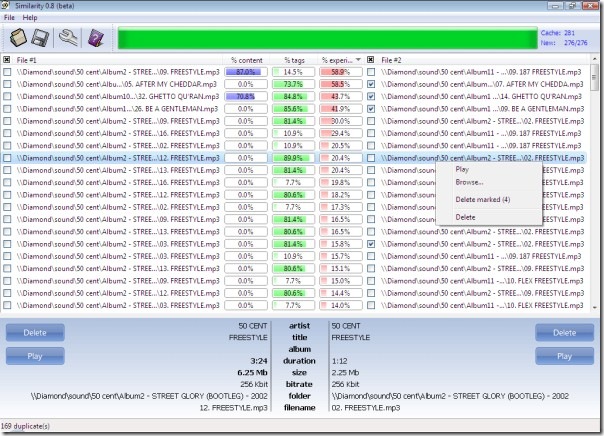
Unlike other tools, Similarity is quite user-friendly. Just select the folders where you want to compare the music files and it will do the rest. The similarity scores for Content, Tags, and Experiment are displayed right in the middle of the screen, giving you a clear picture of how closely matched two files are.
The tool checks bits of content in every music file to determine whether they are similar. If it finds two files to be highly similar, you can right-click the file and select Play to listen and verify the match yourself. This manual verification step is especially useful when you want to be certain before deleting any files permanently.
Similarity processes files quite fast and allows you to compare music files both on your local computer and over a network. This makes it a practical choice for users who store their music libraries on a NAS device or shared network drive. Note that Similarity is an older legacy utility — its documented compatibility list covers Windows 2000, XP, 2003, Vista, and 7. If you are running Windows 10 or Windows 11, check the developer’s website for the latest compatibility information before relying on it for a full library cleanup. If you find the tool is no longer actively maintained, AllDup or Audio Comparer are actively supported alternatives worth considering.
Tips for Getting the Best Results
Before you run a scan, it is worth taking a few preparatory steps to ensure the most accurate results. First, make sure your music files are organised into clearly defined folders. Scanning a single root folder that contains all your music will give Similarity the broadest possible view of your library, reducing the chance of missing duplicates stored in subfolders.
Second, consider which algorithm is most appropriate for your situation. The content-based algorithm is the most thorough and works well even when file names and tags differ between duplicates. The tags-based algorithm is faster and is ideal if your library is well-tagged and you simply want to catch files that share identical metadata. The experimental algorithm can catch edge cases that the other two miss.
Third, always preview files before deleting them. Even with a high similarity score, there can be legitimate reasons to keep both versions — for example, one may be a higher bitrate encode of the same track. Using the built-in Play function to audition files before removal is a habit that will save you from accidentally deleting music you want to keep.
Music duplicates are not all the same, and knowing what type you are dealing with helps you decide which copy to keep. Watch out for these common scenarios:
- Exact duplicates with identical size and hash: These are safe to delete one copy of immediately — they are the same file saved twice.
- Same song, different tags or filenames: One copy may have complete artwork and correctly formatted tags while the other does not. Keep the better-tagged version.
- Same song in different formats or bitrates (for example MP3 vs FLAC, or 128 kbps vs 320 kbps): These require a deliberate choice. Unless storage is critical, keep the lossless or higher-bitrate file and remove the lower-quality copy.
- Tracks with different durations due to leading or trailing silence: A high content-similarity score with a slightly different length can indicate one version has been trimmed or padded. Listen to both before deciding.
- Duplicate songs in different album folders: This often happens when a track appears on both an original album and a compilation. Decide whether you want both for library organisation reasons, or keep only one and update the tags accordingly.
When in doubt, use this safe retention checklist: keep the lossless or highest-bitrate copy, keep the file with the most complete tags and embedded artwork, keep the version stored in the correct album folder, and move any uncertain matches to a dedicated review folder rather than deleting them immediately. Reviewing that folder after a few days with fresh ears is far easier than trying to recover files you deleted in haste.
Remove Duplicate Music Files in Apple Music, iTunes, and Device Libraries
Not all duplicate music problems live in plain folders on a Windows drive. If you manage your collection through a media app or sync it to portable devices, it is worth checking for duplicates at the library level before going anywhere near the underlying files. Here is what to know:
- Apple Music on Mac: Open the Music app, click Songs in the sidebar, then choose File > Library > Show Duplicate Items. This surfaces tracks the app considers duplicates based on song name and artist. Review them before deleting, as Apple Music removes the file from disk when you delete it from the library.
- iTunes on Windows: The same Show Duplicate Items option is available under the File > Library menu. Check for duplicates here first so you understand what the app is tracking before you scan the underlying folder with a file-system tool.
- MP3 players and external drives: Connect the device or drive and point your duplicate finder directly at that storage location. Scanning only your main PC folder will miss duplicates that exist only on the device.
- NAS and home-server libraries: Network-attached storage can accumulate duplicates from multiple computers syncing to the same share. Scan the NAS folder path directly and confirm whether you are seeing duplicate database entries in the media server software or actual duplicate files on disk — these require different fixes.
- When to use a library tool vs a file-system finder: If your app shows duplicate entries but the underlying files are different (for example, one is a purchased download and one is an import from CD), a file-system duplicate finder will not help — use the app’s built-in tools to manage those entries instead.
Why Regularly Removing Duplicate Music Files Matters
Over time, music libraries can accumulate a surprising number of duplicates. This happens through repeated downloads, syncing across devices, importing from CDs multiple times, or simply copying folders without checking for existing files. Duplicate tracks waste storage space, clutter your library view, and can cause confusion in media players that display multiple entries for the same song.
Regularly auditing your collection with a dedicated tool like Similarity keeps your library clean, saves disk space, and improves the overall listening experience. Whether you manage a modest personal collection or a large archive of thousands of tracks, making duplicate removal part of your routine digital maintenance is well worth the effort.
Similarity is available to try via its free trial, so you can test it against your library before committing to a paid licence. If you find the trial limitations too restrictive for a full cleanup, the alternatives linked throughout this article offer comparable functionality. Give one a try and enjoy a cleaner, more organised collection.