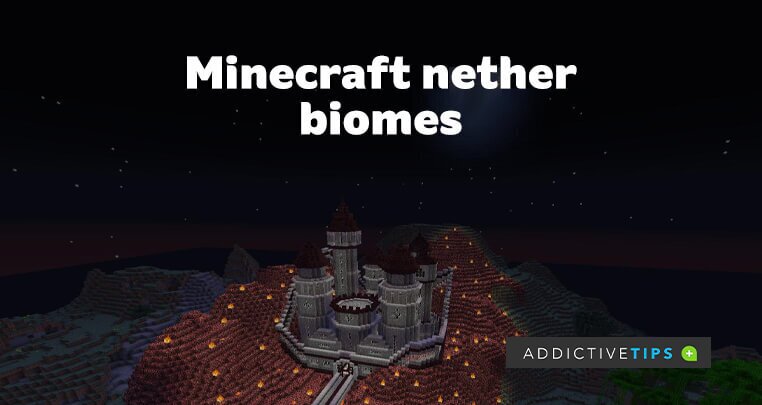
If you are new to Minecraft, you probably want to know what the heck are Minecraft Nether Biomes. You may have even heard that the Nether is a scary place in Minecraft you should probably avoid.
So, to help you navigate this hell-in-Minecraft like a pro, this article will cover everything you need to know about the Nether, Biomes-starting with the basics:
What is the Nether?
The Nether is one of the three dimensions in Minecraft. The others are “The Overworld” and “The End.” Among the most dangerous places in Minecraft, The Nether stands out. In addition to hostile mobs, the Nether also contains fire, fungal vegetation, lava, and many strange structures and biomes.
You can get to the Nether by building a Nether portal in the Overworld. However, you will respawn in the Overworld if you die in the Nether, leaving your inventory behind.
What Are Minecraft Nether Biomes?
Minecraft Nether Biomes are the regions that divide the Nether dimension into different environments with distinct geographical features. Unlike Overworld biomes, Nether biomes cannot be identified by water color, grass, or foliage — none of those exist in the Nether. Instead, each biome has its own combination of terrain blocks, atmospheric effects, and mob spawns that make it recognizable once you know what to look for.
Here are the key cues to watch for when identifying a Nether biome:
Surface blocks: netherrack, nylium (red or warped), soul sand/soil, basalt, and blackstone all signal different biomes
Fog and particle effects: each biome has a distinct atmospheric color and density — teal fog in Warped Forest, ash-like particles in Basalt Deltas
Fire color: blue fire is exclusive to Soul Sand Valley; everywhere else fire burns the standard orange-red
Vegetation: red nylium and weeping vines mark Crimson Forest; teal vegetation and twisting vines mark Warped Forest
Mob spawns: the types of mobs that appear around you are one of the fastest ways to confirm which Minecraft Nether Biomes you are in
Complete List of Minecraft Nether Biomes
There are five Minecraft Nether Biomes in total. Let’s take a look at each one so you can identify their distinct features.
Nether Wastes
Before the current Nether upgrade, Nether Waste was the sole biome available in the Nether plane. It is known for its Netherack, and Lava seas are well-known.
In addition, Nether Wastes has two fortresses: Nether Fortress and Bastion Remnants, stocked with foes and uncommon loot.
How to recognize it: Nether Wastes is the most visually plain of the five Minecraft Nether Biomes — expect wide expanses of netherrack broken up by open lava seas and the occasional Nether Fortress or Bastion Remnant looming in the distance. The sky carries that familiar red-orange haze.
Common mobs: Ghasts patrol the open air, and Zombified Piglins wander in groups across the terrain.
Main hazards: Open lava seas make one wrong step fatal, and ghast fireballs can knock you into them without warning. The exposed terrain offers very little cover.
Best for: Mining Nether Quartz and Nether Gold Ore, accessing Nether Fortresses for blaze rods and wither skeleton skulls—especially if you are working toward a beacon and need a nether star guide—and looting Bastion Remnants for rare gear and pigstep music discs.
If you are looking to craft items, Nether waste is a great place to find these items:
Mushrooms (red and brown)
Magma Blocks
Nether Quartz
Soul Sand
Gravel
Nether Gold (ore)
Blackstone
Ancient Debris
Soul Sand Valley
This biome is the desert area in the Nether dimension. But it is not less dangerous than the others. Unlike the red fire in the other Minecraft Nether Biomes, the fire in Soul Sand Valley burns blue flames, which can be crafted into blue campfires and torches with the right blocks.
How to recognize it: You will know you have entered Soul Sand Valley the moment you spot blue fire flickering across the terrain. The ground is covered in soul sand and soul soil, and large fossil structures made of bone blocks jut out of the landscape.
Common mobs: Skeletons and ghasts are the primary threats here, making this biome particularly dangerous at range.
Main hazards: Soul sand slows your movement significantly, which makes retreating from a fight much harder. Combine that with ghast fireballs overhead and skeleton arrows from the ground and this biome can overwhelm unprepared players quickly.
Best for: Collecting bone blocks and fossils for decoration, sourcing soul sand for soul speed enchantments and bubble elevators, and gathering blue fire sources for aesthetic builds that pair especially well with Minecraft glass blocks.
Here are the blocks you will find in this biome:
Netherrack
Soul Sand
Soul Soil
Glowstone
Blackstone
Bone Block
Gravel
Ancient Debris
Basalt
Warped Forest
Warped Forest is another of the Nether’s new biomes. It’s notable for its tree-like buildings and greenish-blue environment. In addition to the warped fungus trees, this biome is noteworthy for its cyan-colored woods, similar to the Crimson forest. If you’re comparing Nether vegetation to Overworld plant life, Minecraft azalea trees are another useful landmark to learn about.
How to recognize it: Warped Forest stands out immediately thanks to its dense teal-colored fog and tall warped fungus trees. Twisting vines grow upward from the ground and the warped nylium floor gives the whole biome an otherworldly blue-green tone that is unlike anything else in the Minecraft Nether Biomes.
Common mobs: Endermen are the only mob that spawns naturally here. No piglins, no hoglins, no ghasts.
Main hazards: The main risk is accidentally making eye contact with an enderman. Otherwise, Warped Forest is the safest biome in the Nether for exploration and building temporary shelters.
Best for: Safe travel and navigation through the Nether, farming ender pearls from endermen if you need to kill an Enderman efficiently, and collecting warped wood for building.
You will find the following building blocks in this Nether biome.
Warped Stem
Warped Nylium
Warped Wart Block
Warped Roots
Warped Fungus
Netherrack
Mushrooms (red and brown)
Blackstone
Shroomlight
Gravel
Twisting Vines
Ancient Debris
Crimson Forest
Crimson Forest is known for its red landscapes, red sky, and red structures. These are the available blocks in Crimson Forest:
Crimson Stem
Crimson Nylium
Crimson Roots
Crimson Fungus
Gravel
Netherrack
Ancient Debris
Nether Wart Block
Blackstone
Shroomlight
Weeping Vines
How to recognize it: The dense red nylium floor, weeping vines hanging from crimson fungus trees, and a deep red fog make this biome impossible to mistake for anything else in the Nether.
Common mobs: Piglins and Hoglins both spawn in Crimson Forest, making it one of the more populated Minecraft Nether Biomes. Note that Piglins also spawn in other locations such as Nether Wastes and Bastion Remnants — they are not exclusive to Crimson Forest. Zombified Piglins are a separate, undead mob that can appear across multiple Nether biomes and are distinct from regular Piglins.
Main hazards: Hoglins will attack you on sight and hit hard. Piglins will turn hostile if you open chests or attack nearby piglins — wearing at least one piece of gold armor keeps them neutral, so make that a habit before entering this biome. Be prepared to deal with both threats at once in tighter areas of the forest.
Best for: Bartering with Piglins for useful items like ender pearls, fire resistance potions, and gravel, and hunting Hoglins for porkchops — one of the few reliable food sources in the Nether. If you want a renewable supply, our guide to breeding mobs can help you turn Hoglins into a steadier food source.
Basalt Deltas
The Basalt Deltas is known for its dark skies and large-dark spikes made out of basalt. What makes it even more unique is that the entire dark landscape is surrounded by red lava, creating a fantastic color mix. With the abundance of lava, there is a small number of blocks here compared to other Minecraft Nether Biomes, so an auto-jump movement guide can help you navigate the terrain more safely.
How to recognize it: Jagged blackstone and basalt columns rise out of lava pools, and a constant drift of ash-like white particles fills the air. The overall palette is dark grey and black, with pockets of lava glowing between the spires.
Common mobs: Magma cubes are the dominant mob here and spawn in large numbers, including very large variants that split into smaller ones when killed.
Main hazards: The jagged, uneven terrain makes movement genuinely difficult, and the lava pockets scattered throughout mean one misplaced block placement or misjudged jump can be fatal. Magma cube swarms can overwhelm you if you get cornered on a narrow basalt ledge.
Best for: Bulk collection of basalt and blackstone, both of which are excellent building materials. Basalt Deltas is the primary source of blackstone in the game.
But you can still find the following blocks:
Magma Block
Mushrooms (red and brown)
Basalt
Netherrack
Blackstone
Ancient Debris
Gravel
How to Identify and Find Each of the Minecraft Nether Biomes
Knowing the names of the five Minecraft Nether Biomes is only half the battle — finding them during actual exploration is what matters. Here is what you need to know before heading in.
Nether biomes generate in large, irregular regions rather than in any fixed order, so you cannot simply walk in a straight line and expect to pass through each one. The transition between biomes is often abrupt: one moment you are in red netherrack terrain and the next you are surrounded by teal trees. Keep moving and pay attention to how the environment changes around you.
The fastest ways to identify which biome you are currently in:
Java Edition debug screen: Press F3 to open the debug screen. The current biome name is displayed on the right-hand side of the screen under the “Biome” label.
Commands: If cheats are enabled on your world, use /locate biome followed by the biome name (for example, /locate biome minecraft:warped_forest) to find the nearest instance of a specific biome.
Block palette and atmosphere: Each biome has a dominant visual signature you can learn to read at a glance.
Quick visual identification guide for all Minecraft Nether Biomes:
Nether Wastes: Mostly netherrack and open lava seas; the most common biome you will encounter
Soul Sand Valley: Blue fire and a floor of soul sand and soul soil; fossil structures visible in the terrain
Crimson Forest: Red tones throughout, weeping vines hanging downward, red nylium floor
Basalt Deltas: Blackstone and basalt spikes rising from lava, constant ash particle effects in the air
For a deeper look at how biome generation works across all three dimensions, the official Minecraft Wiki biome reference is an excellent resource to bookmark.
There is a lot to learn about Minecraft Nether Biomes: how to craft certain potions, how to defeat mobs, and how to safely explore challenging areas. If you also play the spinoff, our guide to the best weapons for Dungeons is worth checking out. Mastering Minecraft jump controls can also make navigating tricky Nether terrain much easier.
We frequently publish new Minecraft tips and tricks—whether it’s survival strategies, biome guides, or crafting tutorials—so feel free to browse and find something that sparks your interest. You can also request a topic you’d like us to cover in the comment.
Ganiu is an astute technical writer with a special interest in gaming and Cryptocurrency. He is a PlayStation enthusiast whose passion lies in writing problem-solving articles.