EU Website Blocks and What They Mean
Unless you’ve been living under a rock, you’ve probably noticed a ton of new EU website blocks appearing across Europe. Today, we’ll explain why this has happened, plus what to do about it. You’ll learn how to bypass URL blocks imposed by your ISP with a VPN, plus which providers are the best at doing so.
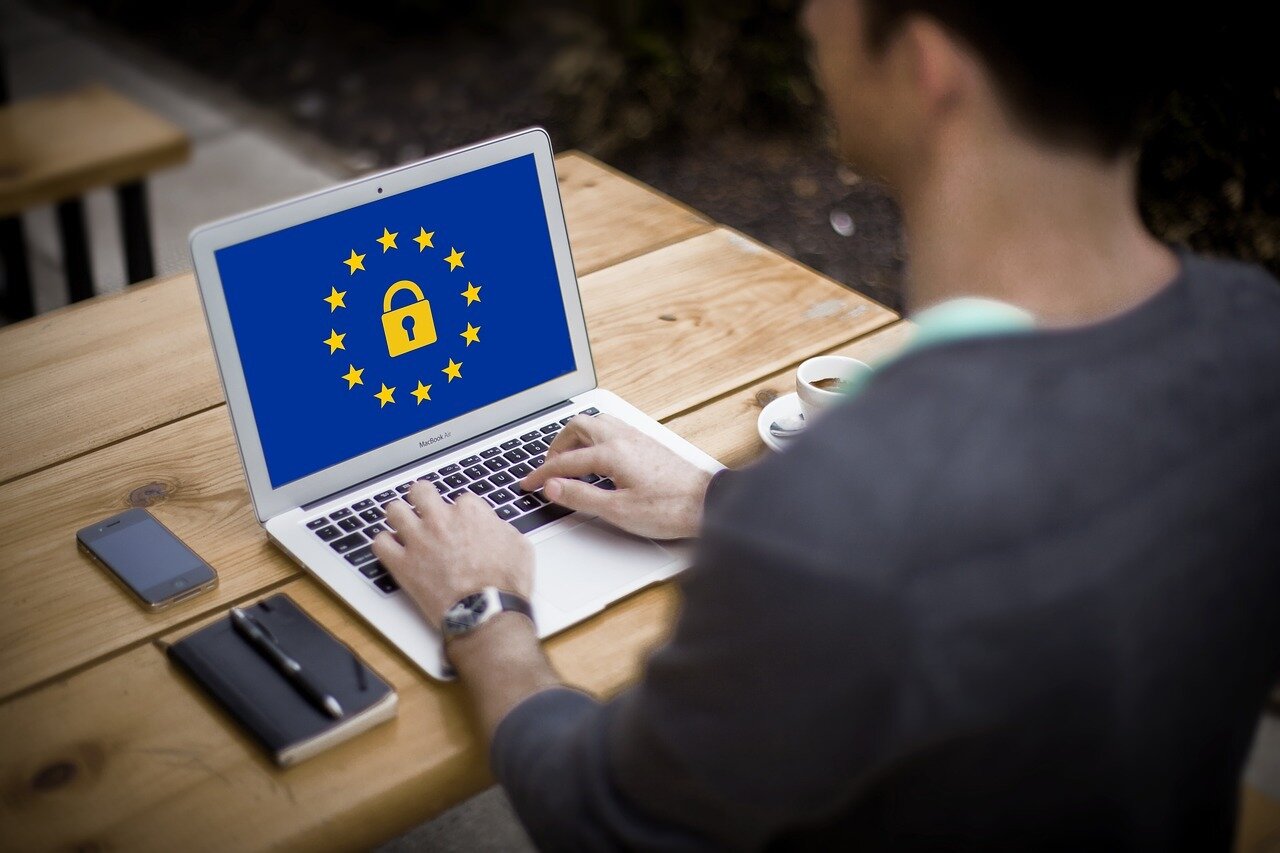
In 2017, the EU introduced a new piece of legislation — Regulation (EU) 2017/2394 on Consumer Protection Cooperation — that has had a major impact on the way that EU website blocks are enforced within member states. In theory, this legislation is for consumer protection and is to prevent customers from getting scammed or inadvertently purchasing defective products – which sounds just fine. In practice, however, the legislation allows consumer protection bodies to enforce blocks of any website they wish without a court order or judicial authorisation. The website blocking infrastructure created by this piece of legislation should be a concern to everyone in Europe who is concerned about internet privacy and freedom.
Government blocking of websites is a drag, but you can regain access with these secure VPNs:
- NordVPN – Best Site Unblocker – NordVPN is the most robust privacy solution on the market, and makes short work of EU website blocks. With unbreakable NordLynx encryption, a battery of specialty servers, and built-in smart DNS functionality, you can access virtually any site you want.
- Surfshark – Looking for a potent geoblock-busting solution for not a lot of money? Try Surfshark, a powerful new provider available at a fraction of the price.
- ExpressVPN – A time-tested VPN that works even in restrictive countries like China. ExpressVPN is famous for speed, and is a great choice for buffer-free streaming.
- IPVanish – IPVanish is an industry favorite, offering a great balance of usability, utility, price, and performance.
- PureVPN – Need more spoofing options? PureVPN’s network encompasses more than 140 countries, giving you access to virtual IPs in every corner of the globe.
In today’s article we’re going to explain all about the EU website blocks and what they mean, then show you how to get around these and other website blocks so you can use the internet freely.
Editor’s note: If you’re here looking for info on the more recent GDPR site blocks, check out How to access foreign news sites in Europe.
What Are The EU Website Blocks?
Before diving into the specifics, it is worth understanding that “EU website blocks” is an umbrella term covering several very different regimes. These include copyright and piracy blocks ordered by national courts, administrative consumer-protection and fraud blocks operated under the Consumer Protection Cooperation framework, national-level blocks for areas such as gambling or child-safety enforcement, and publisher-imposed blocks in which website owners proactively deny access to EU visitors for compliance reasons. The 2017 consumer-protection regulation discussed in this article is only one part of a broader and more complex blocking landscape.
In November 2017, the European Parliament passed Regulation (EU) 2017/2394 under the title Consumer Protection Cooperation. The regulation was adopted in 2017 and became applicable across the EU in January 2020. The aim of this regulation was to give power to individual countries’ consumer protection authorities to block access to websites which infringe on EU consumer law. So, this would cover things like companies which were selling defective or dangerous products, companies that were selling fake or counterfeit products, or sites which were scams and which took people’s money without sending them a product. This all sounds reasonable and it is certainly good that consumers are being protected from inadvertently buying fake or dangerous products.
However, there are concerns about the way the regulation is implemented. Now, a consumer protection authority can force their country’s ISPs to block access to any website, immediately and without any kind of judicial oversight. A standard solution to a consumer protection issue would be to force a website to remove content that infringes on the laws, not to block access to a whole website.
The concern is less that any particular consumer protection authority will misuse their powers – after all, it seems pretty unlikely that a consumer protection body would implement EU website blocks targeting political parties, for example – and more that this process will set up a website blocking infrastructure which could be misused by other branches of government.

If this seems paranoid, consider that websites related to independence for Catalunya were blocked during unrest in the region recently, and the reason that the sites were able to be blocked so quickly was that website blocking infrastructure had already been put in place for protecting against copyright infringement. This shows how a system of website blocking which is set up for one purpose – say, the protection of consumers – can be quickly adapted to be used to stifle free speech and prevent political criticisms of governments.
MEP Julia Reda from the Pirate Party spoke out against the new consumer protection regulation, saying that it gave consumer protection authorities the right to “order any unspecified third party to block access to websites without requiring judicial authorisation” and raising concerns over the potential misuse of the website blocking infrastructure.
As of 2024, the EU’s website-blocking landscape has expanded well beyond the 2017 consumer-protection framework. National courts across the EU have issued a growing number of Court of Justice of the European Union (CJEU)-backed copyright blocking orders, and several countries — most notably the Netherlands — have developed dynamic blocking orders that automatically update to follow migrating piracy sites without requiring a new court ruling each time. This evolution means that “EU website blocks” now refers to a patchwork of website blocking legislation and other legal mechanisms rather than any single policy.
How Do EU Website Blocks Work?
So how is it that websites actually get blocked, whether by a consumer protection authority or by some other government agency? The first thing to know is that governments in Europe do not actually block websites themselves. Instead, they send notices to all the ISPs that operate within their borders, and inform the ISPs that they must prevent their customers from accessing the blocked sites.
Whether the sites are being blocked for copyright infringement, consumer protection, or censorship or anti-government ideas, the ISP is simply obliged to prevent access to any URL that the government instructs them to. Usually, a website block would have to be approved by a court where it would be demonstrated that the site was dangerous or illegal – but under the consumer protection regulations, no court order is required to block a site.
RELATED READING: How to unblock websites banned by the Chinese government
In practice, ISPs across Europe use several different technical methods to enforce blocks, and the method matters. DNS blocking prevents your device from resolving a domain name into an IP address and is one of the most common and easiest techniques to circumvent. IP blocking cuts off access to a specific server address but can inadvertently affect other websites hosted on the same infrastructure. URL filtering inspects the web address at a more granular level, blocking specific pages rather than entire domains. SNI-based filtering reads the site name from an HTTPS connection handshake before full encryption takes effect. Finally, some blocks produce no visible warning page at all — connections simply time out or are reset silently, leaving users confused about why a site will not load. Understanding these distinctions matters: DNS blocks are fundamentally different from IP blocks, some methods cause collateral overblocking of unrelated sites sharing the same infrastructure, and you cannot always rely on receiving a notice explaining that access has been denied.
When an ISP receives a notification from the government about a block that they must apply, they set up a filter for their customers’ traffic so that anyone who types in the URL of a blocked site is redirected to a notice that the site has been blocked. This makes it impossible for users to access the website in question. And because the government sends out blocking notices to all the ISPs at the same time, users won’t be able to access the blocked website for anyone else’s internet connection either.
Users may still want to access blocked sites, however. If you wonder why a user would want to access a blocked site for a legitimate reason, just take a look at a list of websites erroneously blocked in the UK as an example. Some of the websites accidentally blocked in the UK the last ten years include Wikipedia, WordPress, Imgur, and Wayback Machine – all very popular sites that had content mistakenly blocked. Users want free access to the internet, and not to have clumsy EU website blocks put in place without judicial authorisation.
Why Some Sites Block EU Visitors Instead of Being Blocked by the EU
Not every block you encounter in Europe is imposed by a government or an ISP. A significant category of blocks works in the opposite direction: the website owner is the one choosing to deny access to EU visitors, rather than any authority ordering the block.
This became especially visible after the EU’s General Data Protection Regulation (GDPR) came into force in 2018. Rather than adapting their data-collection practices to comply with GDPR requirements, many non-EU publishers — particularly US-based news websites — chose to block European visitors entirely or serve stripped-down versions of their sites with limited functionality. In these cases, an EU reader attempting to visit the site either encounters a message explaining that the site is unavailable in their region, or is redirected to a bare-bones GDPR-compliant version with most content removed.
This is an important distinction from state-ordered blocking. The cause is the publisher’s own compliance decision, not government censorship. A VPN can still help in these situations — connecting to a server outside the EU can make it appear that you are browsing from a country where the publisher has not restricted access — and if you’re looking for a more specific adult-site workaround, see our guide to Pornhub EU access; for a similar example outside Europe, see our Canadian news block workaround. The practical solution is similar; the reason behind the block is entirely different.
How Website Blocking Varies Across EU Countries
It would be a mistake to think of EU website blocking as a single, uniform system. Implementation varies considerably from one member state to the next, and if you need to test access from a specific market, a Latvia virtual IP, an Austrian region IP, or a Poland location VPN can help; if you’re evaluating providers for one market in particular, our best Austria VPN choices can help. What is blocked in one country may be freely accessible in another.
While all EU member states operate under shared frameworks such as the Consumer Protection Cooperation regulation and EU copyright directives, each country retains significant discretion over how it enforces blocks, which categories of sites it targets, and how transparent it is about doing so. Common categories of blocked content across the EU include piracy and copyright-infringing sites, illegal gambling platforms, fraudulent or consumer-protection-violating websites, and other nationally regulated content such as material related to child safety. However, the specific sites on any given country’s blocklist, the legal mechanism used to order the block, and whether that blocklist is published publicly all differ significantly between member states.
Some countries maintain relatively transparent processes, publishing regulator reports or blocklists that allow researchers and the public to scrutinise what is being blocked and why. Others operate with far less transparency. Independent network-measurement projects — including research published in peer-reviewed journals analysing blocking across all 27 EU member states — have identified blocks that do not appear on any public list and for which no clear legal basis has been disclosed. For users, the practical takeaway is this: the fact that a site is accessible in one EU country does not guarantee it is accessible in another, and not every block you encounter will come with an explanation.
How Can You Get Around EU Website Blocks?
The best way to get around EU website blocks is to use a VPN. A VPN works by installing a piece of software on your device which encrypts all of the data that you send over the internet. This encrypted data is passed to a server run by your VPN company, and at this server your data is decrypted and sent on to its original destination. Because of the encryption, your data cannot be hacked or observed. And because your data is sent from a server located somewhere other than your actual location, you can use this process to get around EU website blocks effectively.
Say, for example, that the EU decides to block a site like WordPress, either intentionally or erroneously. If you live in the UK and you went to visit the blocked URL, you’d see a notice that the domain was blocked. You can then turn on your VPN software and connect to a server somewhere outside of the EU – say in Canada, where internet freedom is pretty good. Then, when you try to access WordPress, your connection is routed via Canada, where the site is not blocked. This means that you can see the site and use it as normal, even though it is blocked in the EU.
This trick works to access all sorts of content which is blocked in your region, from government censorship to unblocking region locked content like the BBC or Sky Go. It can also help with Australian region access; for another country-specific example, see our Kuwaiti IP address guide. It can even help you get around VPN blocked networks, and in some cases it can support a forum ban bypass when restrictions are tied to your IP address. Alternatively, if you prefer not to use a VPN, you can access blocked content through a web proxy browser, which routes your traffic through an intermediary server to mask your location.
Our Recommended VPNs to Bypass EU Website Blocks
If you’re looking for a VPN that will let you get around EU website blocks and enable you to browse the internet freely, then we have recommendations for our favourite VPNs for you to try:
1. NordVPN
NordVPN is the VPN to choose if you want truly exceptional security. In addition to the usual security features of 256-bit encryption and a no logging policy, NordVPN offers a unique feature called double encryption. This means that before your data leaves your device, it is encrypted once and sent to a first server. At this first server, the data is then encrypted again, before being sent off to a second server. At the second server, the data is decrypted and sent to its original destination. These two layers of encryption means extremely high security as they make it practically impossible for anyone to crack the encryption, even with the latest tools.
The connections on NordVPN are not quite as fast as others, but this trade off is worth it if you are looking for a VPN to bypass EU website blocks and meet your specific security needs. NordVPN has a range of specialist servers which you can use for features like anti DDoS, dedicated IP, double VPN, onion over VPN, and P2P. These servers form part of an absolutely huge network of more than 3300 servers in 59 countries, which includes many servers both within and outside of Europe.
Notably, NordVPN is one of the relatively few VPNs that works in China, thanks to their obfuscated servers which disguise the fact that they are VPN servers so you can use the service even on networks with VPN blocking. The software can be installed on Windows, Mac OS, Android, and iOS devices, or you can use the browser extensions for the Chrome and Firefox browsers.
Read our full NordVPN review.
- SPECIAL OFFER: 2-yr plan (70% off - link below)
- Fast and stable connections
- Zero leaks: IP/DNS/WebRTC
- No logs and encrypted connections for total privacy
- Live chat support is available.
- Automatic server selection can be unreliable
- Refund processing can take up to 30 days.
2. Surfshark

Surfshark is singularly well-adapted to unblocking restricted websites. As with any good VPN, it offers top-tier encryption and a large network, but also packs a few special features not often seen elsewhere.
For example, each of their 3200 servers in 65 countries comes equipped with the ability to automatically configure smart DNS settings and enable obfuscation. These activate as your VPN detects specific types of Internet restrictions, counteracting them before you even notice. It works like a charm for proxy-banning sites like Netflix.
Of course, EU website blocks are usually not so sophisticated, so Surfshark’s 256-AES-GCM encryption is more than enough to let you slip through. Combined with a strong logging policy, IP/DNS/WebRTC leak protection, and a kill switch, your ISP will never know what it is you’re trying to access, blocking them from throttling your connection. We also love that Surfshark lets you protect as many devices as you want under one subscription, really ringing in the value for money of this up-and-coming provider.
- Robust servers blast through geoblocks to access your favorite streaming sites
- Multi-hop connections readily available
- Expansive anti-ad and anti-malware database constantly updated
- VPN home jurisdiction in British Virgin Islands is ideal for privacy
- Support staff manned by actual human beings 24/7.
- Speeds occasionally suffer a noticeable drop
- Apps don’t allow for much manual fiddling for power users.
Read our full Surfshark review.
3. ExpressVPN
ExpressVPN is one of the most popular VPNs among heavy internet users due to its unbeatable combination of speed, security, and flexibility. The connections are lightning fast so you won’t be waiting around for your pages to load. And the security is top notch, with the use of 256-bit encryption to keep your data safe and a company no logging policy to preserve your privacy.
The ExpressVPN service offers you access to a huge number of servers – over 1000 servers in 90 different countries, including those in Northern America, Europe, the Middle East, Asia, and more. This means that you will have plenty of options of servers to connect to in order to get around EU website blocks and any other region-based restrictions that you might come across. The software can be installed on a wide range of platforms, including Windows, Mac OS, Linux, iOS, Android, and more, or you can use the simple browser extensions available for Mozilla Firefox, Google Chrome, and Apple Safari.
Read our full ExpressVPN review.
- SPECIAL OFFER: 3 months free (49% off - link below)
- Super fast servers
- Govt-level AES-256 encryption
- No personal information logs kept
- Live chat support available.
- High cost for month-to-month users.
4. IPVanish
IPVanish is a favourite VPN for users who want the fastest possible connection speeds for ease of use and lightning fast downloads. The impressive speed of the connections is complemented by excellent security, including the essential strong 256-bit encryption and a no logging policy. You’ll also find extra security features in the software like a kill switch which you can use to cut off your connection when the VPN is down to prevent you from accidentally sending data over an unsecured connection, periodic IP address change for enhanced privacy, and DNS leak protection for maximum security.
The server network covers over 1000 servers in more than 60 countries, including plenty in Europe, Asia, North America, and beyond, so you can easily find a server to bypass EU website blocks and other region restrictions. The software can be installed on platforms running operating systems including Windows, Mac OS, Linux, and Android.
Read our full IPVanish review.
5. PureVPN
PureVPN is the ideal choice for users who are searching for a simple and easy to use security package. A subscription to PureVPN includes access to a VPN with excellent security, like the use of 256-bit encryption and no logging policy. There are also features like DDoS protection, a kill switch, the option for a dedicated IP, and a NAT firewall. This VPN can be used for getting around EU website blocks or other restrictions as it has more than 750 servers in 140 countries including many both within and outside of Europe.
But PureVPN offers more than just a VPN. In addition, you’ll also get access to a bundle of security software like anti malware and anti virus software to protect your device from malicious software, and an anti spam filter to keep junk mail out of your email inbox. If you’re looking for a simple, one-stop security solution then PureVPN is ideal. You can install the PureVPN software on platforms running Windows, Mac OS, Android, or iOS, or use the browser extensions which are available for the Chrome and Firefox browsers.
Read our full PureVPN review.
Conclusion
Although consumer protection is obviously important, the EU regulations which allow consumer protection authorities to order EU website blocks without judicial approval are extremely concerning. Website blocking infrastructure like that set up to protect consumers or to prevent copyright infringement has already been used to block websites which are critical of EU governments and to stifle political debate.
In order to get around EU website blocks and to use the internet freely, the best thing to do is to use a VPN. This will allow you to connect to the internet via a server in another country, which means you can get around regional restrictions and browse as if you were located elsewhere in the world. We’ve recommended a selection of our favourite VPNs that you can use to access a more free and open internet.
Have you had experience with websites being blocked in your country, either in the EU or elsewhere in the world? What methods do you use to access blocked websites? Let us know in the comments below.
If you need a VPN for a short while when traveling for example, you can get our top ranked VPN free of charge. NordVPN includes a 30-day money-back guarantee. You will need to pay for the subscription, that’s a fact, but it allows full access for 30 days and then you cancel for a full refund. Their no-questions-asked cancellation policy lives up to its name.